Fire Mitigation in Estes Park
In October 2020, Estes Park watched a fire do something the experts said fires don't do: jump the Continental Divide and force the whole town out. Mitigation in the Estes Valley stopped being theoretical that night. I grind the fuel around homes into mulch on site, machine work, no piles, no hauling.
2020
The Night East Troublesome Crossed the Divide
The East Troublesome Fire started on the west side of the Continental Divide, and on October 21, 2020, it ran an almost unbelievable distance in a single wind-driven night. Then it did the thing nobody plans for: it spotted across the tundra of the Divide itself and came down into the east side drainages above Estes Park. The town evacuated. Thousands of people funneled down the canyon roads in the dark with the sky glowing behind them. Snow arrived in time, and the town survived. That was weather, not planning.
Every homeowner in the valley now knows something they can't unknow. Fire can arrive here from a direction the maps called impossible, in October, moving faster than official notice. The window where mitigation felt optional closed that night.
The Cameron Peak Fire was burning that same month on the far side of the valley's northern skyline, the largest in state history. Two record fires flanking one town in one October. Nobody who sat in that evacuation line needs convincing anymore, and the conversation in the valley has shifted from whether to mitigate to how fast it can get done.
THE VALLEY
Fuels From Fall River to Marys Lake
The Estes Valley is a bowl of homes surrounded by timbered slopes. The Fall River corridor climbs west through dense mixed conifer toward the park boundary, which is exactly the path East Troublesome used. Prospect Mountain rises right out of the middle of town with houses wrapped around its flanks. Neighborhoods around Marys Lake sit against grassy slopes and rock with timber above. And below everything, the Big Thompson canyon is the main way out, narrow and winding, which makes evacuation slow and makes hauling debris out expensive.
The fuel problem is mostly ponderosa and Douglas-fir with heavy ladder fuel underneath: young trees, limbs to the ground, juniper around foundations, and decades of accumulated deadfall on lots that haven't been touched since the houses were built.
Wind is the other constant. The Estes Valley funnels chinook winds off the Divide that can top hurricane force in winter, and the same terrain that accelerates those winds accelerates fire. East Troublesome covered miles in hours because of exactly that alignment. Fuel breaks and thinned ground don't stop wind, but they starve what the wind is carrying.
THE APPROACH
Machine Thinning on Valley Lots
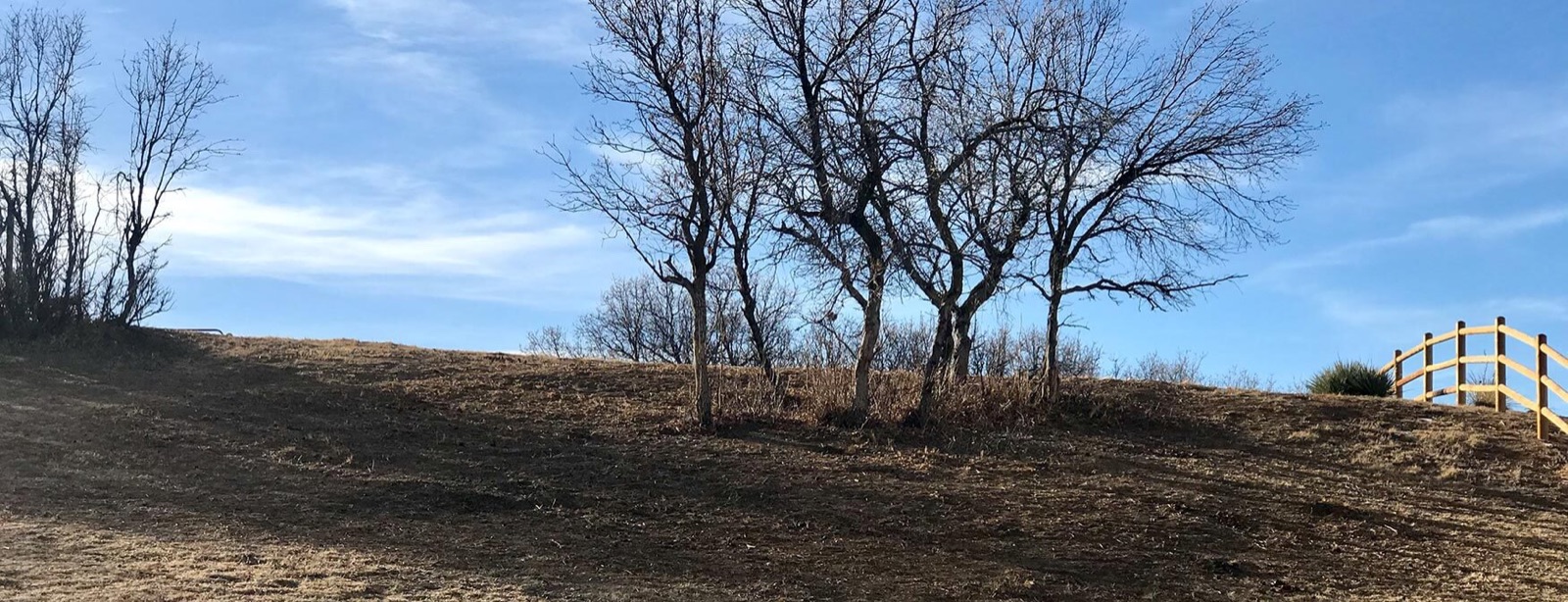
I bring a tracked Rayco forestry mulcher to the property and grind the problem fuel where it stands: the doghair thickets, the dead and down wood, the ladder fuels under mature trees you want to keep. Big healthy ponderosa stay, and they end up healthier with the competition gone. The material becomes a mulch layer on the forest floor. It holds moisture, keeps the dust down, and burns poorly compared to standing brush or dry, jackstrawed slash.
Elk country note, since this is Estes: mulched ground recovers into grass and forbs quickly, and the animals move through open thinned stands more than through dense timber. The work reads as parkland within a season, which matters in a town where scenery pays the bills.
I coordinate with what the town and the fire district are already doing. The Estes Valley has active wildfire planning, community slash programs, and assessment help, and machine work slots into those plans as the heavy-lift layer. If your property already has a written assessment, bring it to the site walk. It makes the quote sharper and often smaller.
WHY IN PLACE
The Case Against Hauling Out of a Canyon Town
Every load of slash that leaves the Estes Valley rides down the Big Thompson or over Highway 7, and you pay for every mile of it, both directions. Burn piles are the other conventional option, and they sit for a year or more waiting for the right snow and the right permit, doing nothing but drying out. Grinding in place deletes both problems. Nothing leaves, nothing waits, and the fire hazard drops the same day the machine works. On most lots it's also simply the cheaper number once hauling is priced honestly.
There's a soil argument too. Valley lots run thin, decomposed granite soils that erode fast when stripped, and every drainage here feeds the Big Thompson. A mulch layer keeps the ground armored while the grass comes back through it. Two seasons on, most treated lots look like someone simply opened up the forest, which is exactly the effect you want in a place that sells its views.
LOGISTICS
How I Handle Work This Far North
I'll be straight with you about geography. I'm based in Larkspur, south of Denver, and Estes Park is a genuine haul with a machine in tow. So I take Estes Valley work at a scale that justifies the trip: multi-acre thinning, several neighbors booking together, HOA common ground, or a substantial defensible space project. A cluster of small jobs scheduled in the same week works too, and neighbors splitting mobilization always come out ahead.
Timing works in your favor if you plan it. I batch northern trips in the shoulder seasons when Front Range work slows, so spring and fall dates carry less friction than midsummer. Winter site visits work fine as well. Walking a lot with snow on it tells me plenty, and it gets you a number before the busy season starts.
If that fits your situation, send the details through my quote page and I'll give you an honest answer about scheduling and cost. You can see finished machine work on the projects page, and the service area map shows how I cover the state. One operator, one machine, cash or check, and no pressure. The valley's been through enough of that.
Free Quote · No Obligation
Clear the fuel before fire season, not during it
Or call the shop: (719) 400-9104