Forest Restoration
A century of putting out every small fire left Front Range forests choked, overgrown, and primed to burn catastrophically. Restoration puts them back toward what they should be: fewer, bigger, healthier trees with space between them and open ground below. We do it with a mulcher and a plan.
Forest Health
What went wrong with our forests
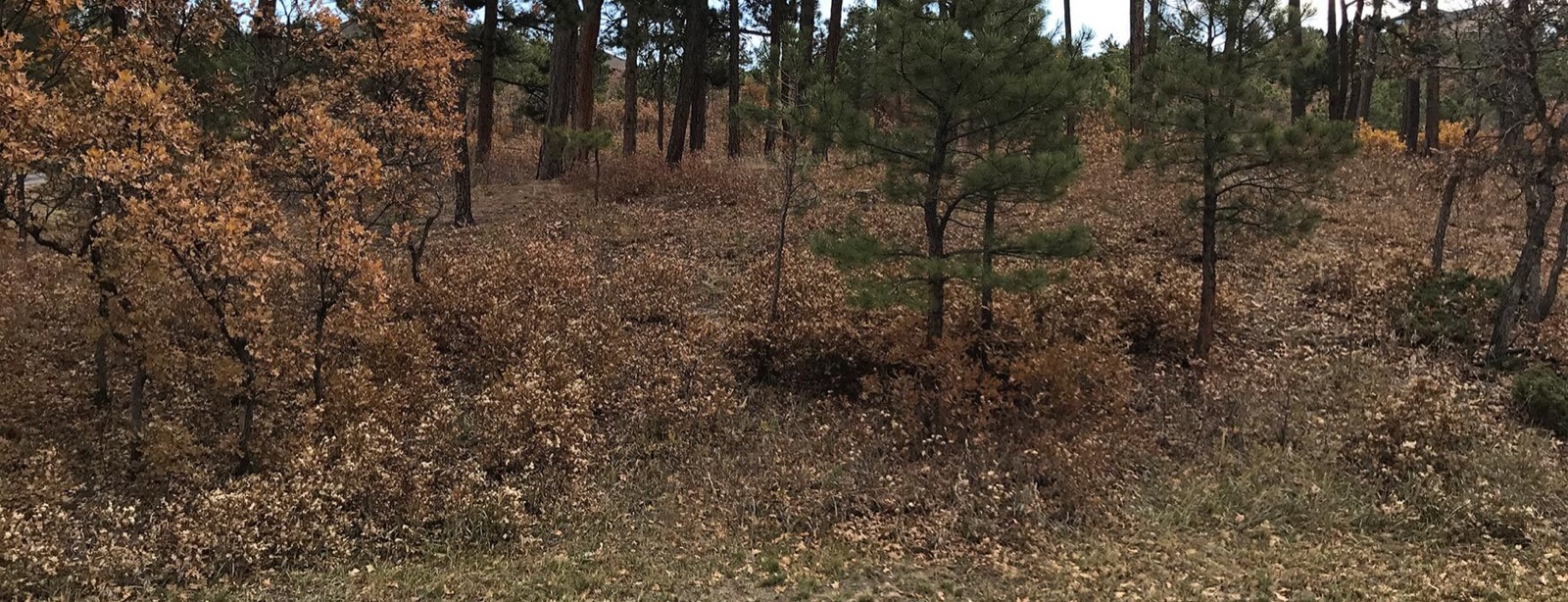
Historic ponderosa forests on the Front Range were open and park-like: big trees spaced wide, grass and wildflowers below, low-intensity fire passing through every decade or two without much harm. Those fires were part of the system, clearing seedlings and deadfall and keeping the stand open. A hundred years of putting out every small fire changed all of it. Stands filled in with thin, crowded doghair pine, dead wood piled up on the ground, and the whole system turned into a dense fuel bed waiting for the big fire that suppression only delayed and made worse. Overcrowded trees also fight each other for the same limited water, so they grow weak, and weak trees are exactly what bark beetles and drought pick off first.
What restoration does
We thin the stand back toward its natural spacing. That means taking out the crowded small stuff and the dead standing timber while leaving the strong, mature trees room to breathe. The mulcher grinds the removed material into a mulch layer that feeds the soil and holds moisture instead of sitting as fuel. The trees that remain get more water, more light, and far better odds against both fire and beetles. Grass and native plants come back on the opened ground. The forest starts to look and function the way it did before we broke it, and it becomes something a fire can move through without leveling.
The restoration process
Overgrown stand to healthy forest
- Read the standWe assess density, tree health, dead wood, and what the site should look like restored.
- Mark the planTogether we decide what stays and what goes, aiming for natural spacing and your best trees.
- Thin and mulchCrowded and dead material is removed and ground to mulch on site. No piles, no smoke.
- A forest that breathesThe remaining trees get water and light, and the stand becomes fire-resilient and healthier.
Slower, more selective than clearing
Restoration isn't clearing and it isn't a rush job. It's selective work, tree by tree in the sensitive spots, guided by what a healthy stand should look like rather than by how fast we can cover ground. On sensitive or steep sites we adjust the approach to protect soil, roots, and the trees we're keeping. The result is a forest that's more open, more resilient, and healthier for the wildlife that depends on it, not a scraped lot.
Health and fire, together
Restoration and wildfire mitigation are the same work seen from two angles: a healthier forest is a more fire-resilient one, and reducing fuel is also reducing the competition that makes trees sick. On larger parcels this runs right alongside forest thinning and fuel reduction, and it frequently qualifies for state and county forest-health cost-share programs. If you've got wooded acreage that feels too thick to walk through, that feeling is the forest telling you it's overdue.
Common Questions
Questions we get about this work
Isn't cutting trees bad for the forest?
How many trees will you take out?
What happens to everything you cut?
Does restoration work qualify for grants?
Will the forest look bare after you thin it?
Free Quote · No Obligation
A restored forest survives the fire that levels an overgrown one
Or call the shop: (719) 400-9104