
Defensible Space Around Your Home
When a wildfire runs, your house survives on the choices you made months earlier. Defensible space is the cleared, thinned buffer that gives firefighters a place to stand and gives your home a chance when nobody's coming. We build it with a forestry mulcher, in a day, on most lots.
The Core Service
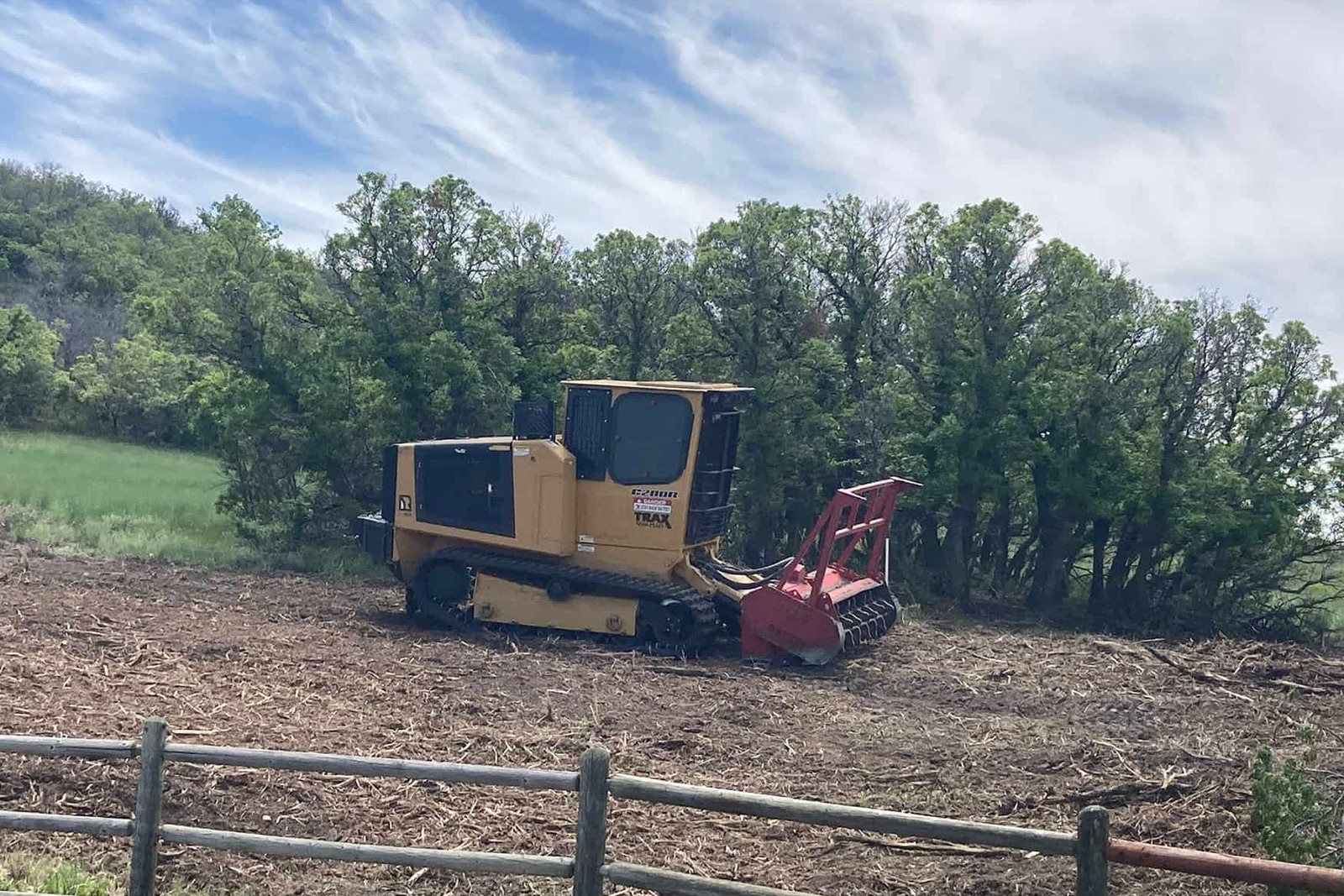
What defensible space actually means
Defensible space is the treated buffer between your home and the wildland fuel around it. It does two jobs at once. It slows and cools an approaching fire so the flames that reach your house are survivable, and it gives firefighters a place they can actually stand and defend, instead of writing the address off from the road. The Colorado State Forest Service splits that buffer into three zones, and each one has a different job. We work all three with the right tool for the distance.
Zone 1: the first 5 feet
Right against the house, nothing should carry fire to the siding. We pull juniper and shrubs off the foundation, clear dead needles out of the rock beds and from under decks, and open the gap that stops a creeping ground fire from climbing into the structure. This zone is small, and it matters most. Most homes that burn in a wildfire don't get hit by a wall of flame; they catch an ember in a pile of dry needles against the wall and light from there. Zone 1 is where you win that fight.
Zone 2: 5 to 30 feet
This is the heart of the work and where the mulcher earns its keep. We thin brush and small trees, break up the continuous fuel that lets flames travel unbroken across the ground, and space what's left so fire can't ladder from the grass into the canopy. Scrub oak thickets, the classic Front Range fuse, get knocked down and mulched in place. The goal here is separation: islands of plants instead of a carpet of fuel, so a fire that gets into this zone runs out of things to burn before it reaches the house.
Zone 3: 30 to 100 feet and beyond
Out here the goal is a thinned, healthier stand, not a clear-cut. We take the dead and the crowded, leave the strong trees room to grow, and reduce the fuel load so a crown fire drops to the ground where crews can fight it. Spacing between tree crowns is what stops a fire from jumping tree to tree across your property. On acreage this zone runs to the property line, and it's where thinning and defensible space become the same job.
How the job runs
From first call to finished ground
- Walk the propertyWe meet you on-site, look at slope, access, and fuel, and mark what stays and what goes. Free, no obligation, no pressure.
- Written plan and priceYou get a clear scope and a firm number before any machine moves. No surprises when the invoice comes.
- One-day mulchingThe tracked mulcher grinds fuel to mulch in place. Most residential lots are done in a single day; acreage runs longer.
- Walk it togetherWe finish, you inspect, and we talk about the maintenance cycle that keeps the space working.
Why mastication beats hauling
The old way was cut, pile, and burn, or cut, pile, and haul. Both are slow, and both leave a mess. Mastication grinds brush and small trees into a chip mulch that stays right on the ground, so there's no burn pile waiting on a permit and a windless day, no line of dump trucks, and no bare soil left to wash out in the first hard rain. The mulch layer holds moisture, feeds the soil as it breaks down, and knocks back the cheatgrass and weeds that usually explode after any ground disturbance. One machine does the cutting, the grinding, and the cleanup in a single pass, which is why a job that used to take a crew a week takes us a day on most lots.
What we leave behind
A finished defensible-space job looks like a property someone takes care of. The fuel is gone, your healthy trees are still standing with room around them, and the ground wears an even layer of mulch instead of scraped dirt or a slash pile. You can walk it, mow the edges, and see your own house from the driveway. That mulch layer isn't waste; it's erosion control and weed suppression you didn't have to pay extra for.
Maintenance is part of the deal
Here's the honest part most companies skip: defensible space is not a one-time purchase. Grass cures every summer, and scrub oak and brush push new growth from roots that a single pass won't kill. The heavy clearing we do buys you years, not forever. Most properties need a lighter touch-up every three to five years to stay in shape, and we'll tell you where yours sits on that clock. Keeping it up is far cheaper than starting over, and it's the difference between protection that's real on the day it matters and protection that lapsed two summers ago.
Pair this with scrub oak removal in heavy thickets and forest thinning on wooded acreage for a plan that covers the whole property, not just the yard. If you're not sure where your risk actually sits, that's exactly what the free on-site walk is for.
Common Questions
Questions we get about this work
How much defensible space do I actually need?
Will this leave my property looking clear-cut?
Do I need a permit for defensible space work?
Does defensible space really change whether a house survives?
Free Quote · No Obligation
The time to clear defensible space is a calm day in spring
Or call the shop: (719) 400-9104