
What Does Land Clearing Mean?
Land clearing means different things to different people: a building pad, a driveway through timber, a view corridor, or a pasture that quietly went back to brush. I do all of it with a forestry mulcher instead of a dozer, which means no topsoil scraped away, no erosion, no haul-off, and no burn permits. And for the right sized job, I'll travel most of Colorado.
DEFINITION
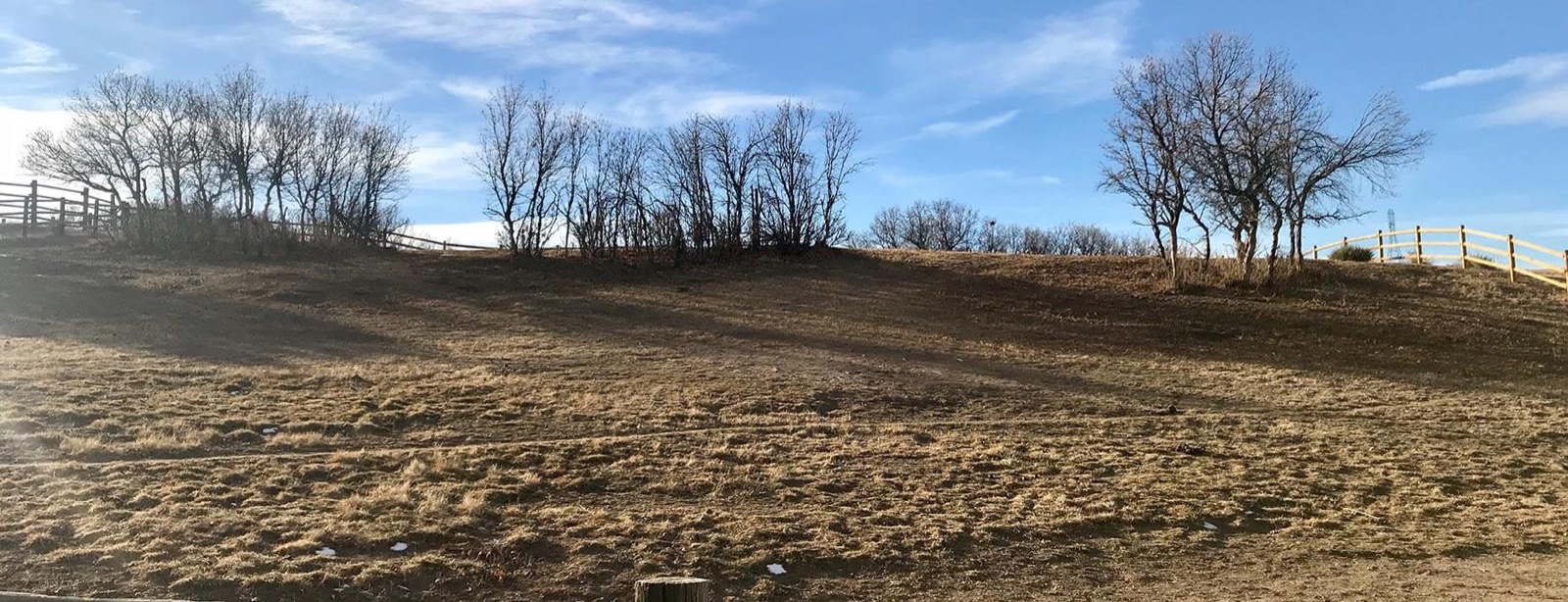
What Clearing Actually Means on the Ground
Strip the industry talk away and land clearing is one question: what's growing on this ground that shouldn't be, and what's the smartest way to make it gone? Sometimes the answer is heavy: a pad site that needs every stem off it before an excavator arrives. Sometimes it's surgical, like a view corridor where you're removing exactly the trees between the deck and Pikes Peak and none of the ones framing it. The tool I bring to all of it is a tracked forestry mulcher that grinds standing vegetation into chips right where it grew.
That single fact, grinding in place, changes the whole economics of clearing. There's no material to load, truck, dump, or burn, which is where the money bleeds out of conventional clearing jobs. The vegetation goes in vertical and comes out horizontal, and the job is done when the machine stops.
Scale is the other axis. I've cleared quarter-acre view windows and I've spent multi-week stretches on parcels measured in dozens of acres, and the method holds across that whole spread. What changes is efficiency: mobilization is a fixed cost, so per-acre pricing falls as jobs grow, and open ground with few obstacles lets the head run at its true pace. The priciest acre I clear is always the first one off the trailer. Every acre after it gets cheaper.
VERSUS
Mulcher or Dozer: An Honest Comparison
A dozer clears land by pushing everything, including your topsoil, into piles. It's the right tool when you need bare dirt at final grade. But for most rural clearing, it's overkill with consequences. Compare what each machine leaves behind:
- Dozer: bare subsoil, windrows to burn or haul, root pits, and a weed flush the next spring
- Mulcher: topsoil intact, roots holding the slope, chips feeding the ground, grass returning through the mulch
- Dozer: erosion control costs after, especially on any grade
- Mulcher: the mulch layer IS the erosion control
- Dozer: burn permits or trucking for the debris piles
- Mulcher: no debris, because there are no piles
So my rule of thumb runs like this. Building footprint at grade: bring in the dirt guys, and I'll gladly rough-clear ahead of them to cut their hours. Everything else on the parcel: mulch it and keep your soil where nature filed it.
USES
Pads, Driveways, Views, and Pasture Coming Back
The four jobs I get called for most, anywhere in the state: rough-clearing building sites so surveyors and excavators can work, cutting driveway corridors through oak and timber to a build site, opening view corridors where a decade of growth swallowed the scenery someone paid for, and reclaiming pasture that went back to brush while the owner wasn't farming it. Pasture work might be the most gratifying. Ground that looked lost comes back to grass in a season or two, because the seed bank was under there waiting the whole time. Fence lines come out of hiding, acreage becomes usable acreage again, and the tax assessor's idea of your land finally matches yours.
Colorado vegetation varies wildly by region and the machine handles the spread: Gambel oak on the Front Range, pinon and juniper in the southern counties, willow-choked bottoms on ranch creeks, doghair pine at elevation. If it's brush or small-to-mid diameter trees, it feeds the same head.
View corridor work gets its own note because it's the most design-driven clearing there is. You're composing with vegetation, framing the peak, keeping the foreground trees that give a view its depth, opening exactly the wedge that matters from the living room window rather than from wherever the machine happens to sit. I cut these iteratively, stepping back to the viewpoint between passes, because a corridor cut two trees too wide can't be apologized back into place.
RANGE
Jobs Worth the Diesel From Larkspur
I'm based in Larkspur and my week-to-week rotation covers the Front Range from south metro Denver through Colorado Springs. But for real acreage, I load the machine and go. I've hauled to jobs hours from home when the project justified the float, and the math usually works once a clearing job passes a few machine-days of work. Travel cost gets stated plainly in the quote, one line, no fuel surcharge games.
If your ground is remote, good. Remote parcels are where mulching shines hardest, since hauling debris off a mountain property is exactly the expense this method deletes. Send photos and acreage through the quote form and I'll tell you straight if the trip pencils out.
Mountain and canyon parcels bring slope into the pricing, and I'm candid about it. The tracked machine works grades that surprise people, but production drops on steep ground and the quote reflects the real pace rather than a flat-ground fantasy. What I won't do is put the machine somewhere unsafe to hit a number. Remote work runs on operator judgment, and the operator you hire is the one who shows up, since there's exactly one of me.
PROOF
See Finished Ground Before You Commit
Clearing is a trust purchase. You're hiring someone to permanently change your land, and the pictures matter more than the pitch. My land clearing projects page shows real completed ground: pads, corridors, reclaimed pasture, before and after. Look there first, then start the conversation at the free quote page. One operator, a tracked Rayco, cash and checks, and a written scope before the machine ever unloads. That's the whole business model, and it's kept me busy for years.
Free Quote · No Obligation
Clear the fuel before fire season, not during it
Or call the shop: (719) 400-9104