
Wildfire Mitigation
Fire mitigation isn't about clearing everything. It's about removing the right fuel in the right places so a wildfire loses its ladder to your roof. We build a custom action plan for each property, save the healthy trees worth keeping, and grind the rest into mulch.
Fuel Reduction
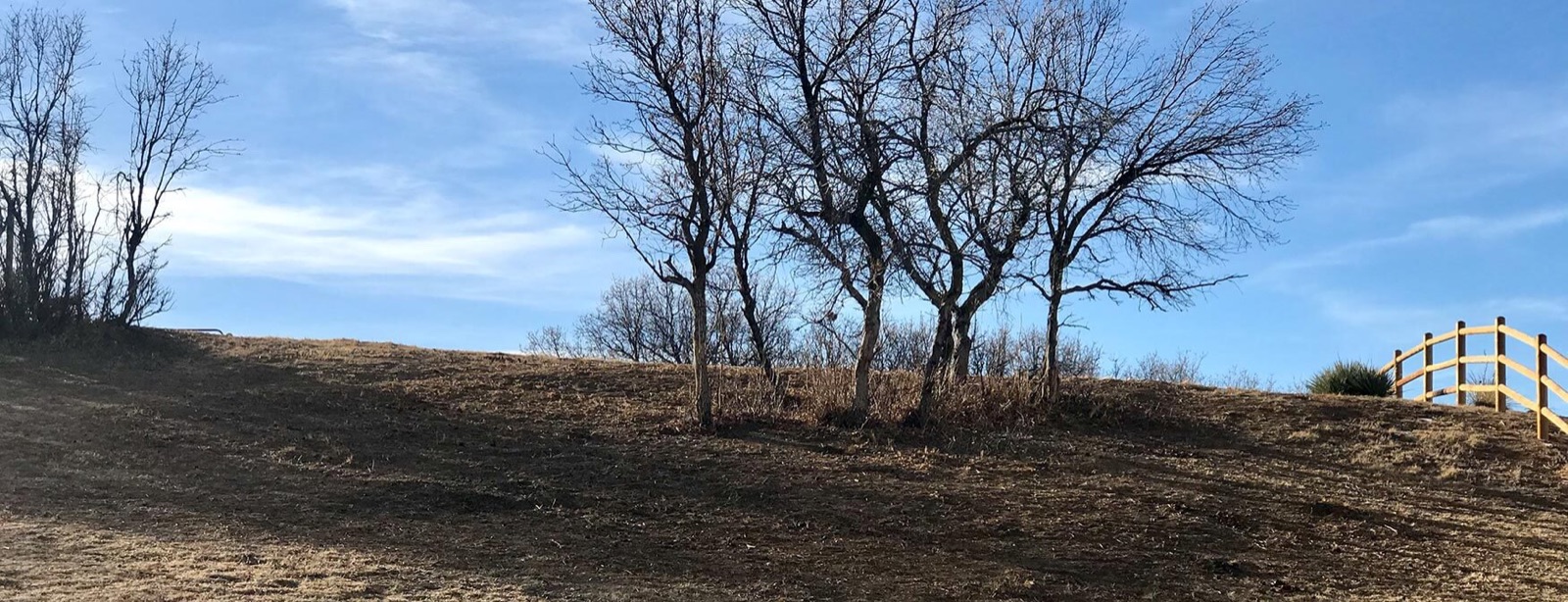
How a wildfire uses your property against you
Fire climbs. It starts in cured grass, jumps into brush and scrub oak, then ladders up low branches into the crowns, and once it's in the canopy it throws embers a mile ahead of itself. Every step in that chain is fuel, and every step is fuel you can remove. Break the ladder and you drop a crown fire back to the ground, where it's slower, cooler, survivable, and something a crew can actually fight. That's the whole idea behind mitigation: you don't stop the fire, you take away what it needs to reach your roof.
The embers are the part people underestimate. A crown fire throws burning material far ahead of the flame front, and those embers are what ignite most homes, landing in gutters, deck corners, and dry brush against the wall long before the main fire arrives. Cutting the fuel around the house is how you starve the embers that would otherwise find a foothold.
Our custom action plan
No two Front Range properties carry the same risk. A Larkspur ridge in dense ponderosa needs a different plan than a Castle Rock lot ringed in Gambel oak, and a flat Parker parcel of open grass needs something different again. We walk the ground with you, map the fuel, and mark exactly what comes out and what stays. Healthy, well-spaced trees are an asset, so we keep them. Dead standing timber, crowded doghair thickets, ladder fuel, and continuous ground brush are the targets. You'll know before we start precisely what the finished property will look like.
Our process
How a mitigation job actually runs
- On-site assessmentWe walk your property, read the slope and fuel, and identify the real ignition risks, not a generic checklist.
- Marked action planYou get a written scope: what's removed, what stays, and a firm price, before any machine starts.
- Mulch in placeThe tracked mulcher grinds ground and ladder fuel to mulch on the spot. No burning, no hauling.
- Maintenance planWe lay out the touch-up cycle and any cost-share programs that apply, so the protection lasts.
What the machine does
Our tracked forestry mulcher runs low ground pressure, so it works slopes and soft ground without tearing up the land or leaving the ruts a truck and a chainsaw crew would. It grinds standing brush, small trees, and downed wood into a mulch layer on the spot. No piles, no smoke, no hauling, no dump fees. On steep or sensitive sites we adjust the approach, but the principle holds: take the fuel, leave the soil, keep the good trees. Because it's one machine doing cut, grind, and cleanup in a single pass, we cover ground fast and the property is usable the day we leave.
Mitigation is a cycle, not a one-time job
Grass grows back every year. Scrub oak and brush push new stems from roots that survive a single grind. Anyone who tells you one visit makes a property fireproof forever is selling you something. The heavy work we do resets the clock and buys years of real protection, but staying protected means a lighter maintenance pass every few years to keep the fuel from rebuilding. We'll be straight with you about where your property sits and what the upkeep looks like, and we'll tell you about the county cost-share and grant programs that can offset both the first job and the follow-ups. Honest mitigation is a relationship with the land, not a single transaction.
This work ties directly into defensible space around the house and forest thinning on the wider acreage. Together they're one plan seen from three distances.
Common Questions
Questions we get about this work
When is the best time of year for mitigation work?
Can you work on a steep slope?
Is there money to help pay for this?
Will removing trees hurt my property value?
Free Quote · No Obligation
Mitigation done in March beats evacuation done in July
Or call the shop: (719) 400-9104