
Scrub Oak Removal in Franktown
Franktown oak doesn't come in backyard portions. Out here it runs in ten and forty acre thickets along the Castlewood Canyon rim and the Russellville Rd corridor, and clearing it well means thinking in phases, not weekends. I build multi-year mastication plans that match the ground, the fire risk, and your budget.
BIG PARCELS
Acreage Oak Is a Different Animal
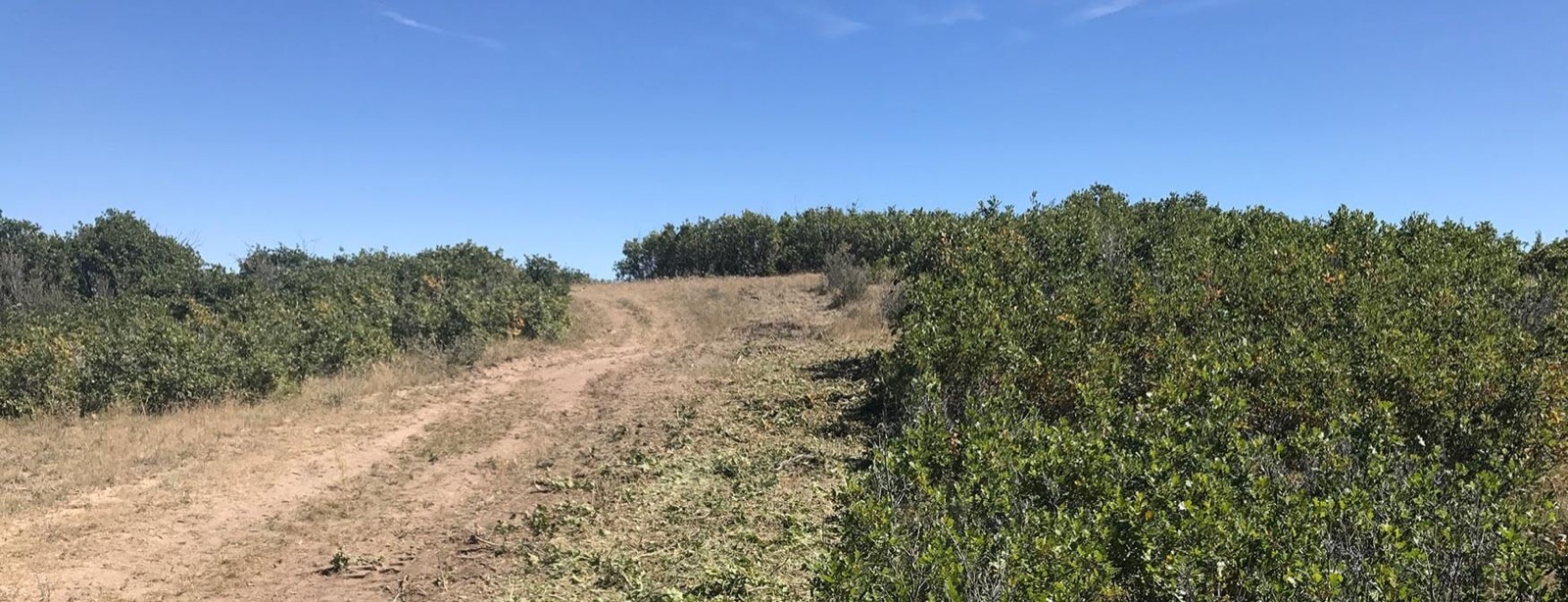
A subdivision oak job is a haircut. A Franktown oak job is ranch work. Properties off Russellville Rd, Bayou Gulch, and the county roads east of Highway 83 carry Gambel oak by the acre, in clonal thickets that have been expanding since the homestead era. You can't lopper your way out of that, and you shouldn't dozer your way out either, because blading forty acres kills the grass, invites every weed in Douglas County, and leaves you with an erosion problem where you used to have a brush problem.
Mastication splits the difference. The machine grinds standing oak into mulch that stays on site, soil undisturbed, grass roots intact underneath. The land keeps functioning while the fuel load drops. That's why big-parcel owners out here have moved to mulching almost across the board.
There's a production side to it too. Ground under mature oak thicket grows almost nothing else, because the canopy takes the light and the roots take the water. Mulch that thicket and the next spring shows you what the land wanted to be: native grasses come up through the chips, forbs follow, and suddenly the parcel supports grazing and wildlife it couldn't feed before. Owners who cleared for fire reasons tend to keep the program going for pasture reasons.
THE PLAN
Phasing a Thicket Over Three Winters
Nobody needs to clear forty acres in one bite, and most budgets shouldn't try. What works is a phased plan. Year one takes the highest-stakes ground: the home ignition zone, both sides of the driveway, and any oak touching outbuildings or propane. Year two pushes the perimeter out and cuts fuel breaks along the property lines. Year three and beyond is maintenance passes on regrowth plus the interior sections we deliberately left for later. Each phase stands on its own, so if life interrupts the plan, the work already done keeps protecting you.
Phasing has a quiet second benefit. Gambel oak resprouts after grinding, and watching how year one regrows tells us exactly how hard to push in year two. The plan gets smarter as it goes. I put it on paper with a map, priced per phase, so you know what the whole arc costs before committing to any of it.
THE RIM
Ground Above Castlewood Canyon
The properties along the canyon rim are some of the prettiest in the county and some of the trickiest to protect. Oak grows dense on those rocky edges, slopes fall away fast toward Cherry Creek, and fire coming up out of the canyon would hit rim properties with a running start. Terrain like that punishes big dumb equipment. A tracked mulcher, worked carefully and kept off the true drop-offs, can thin those rim thickets without disturbing the shallow soils that hold the edge together.
I leave buffer vegetation where the ground demands it and focus the grinding where it changes fire behavior: the upper thirds of slopes, saddles where wind funnels, and the last hundred feet before structures. And where the machine genuinely shouldn't go, I say so. There's no version of this work where wrecking a canyon edge counts as mitigation.
Access on rim properties takes planning as well. Some of those parcels run long and narrow, buildable ground up front and the oak stretching back toward the edge. I map the machine route before the first pass so tracks stay off septic fields and out of the drainages, and if a gate needs widening or a culvert needs protecting, we sort it before mobilization day rather than during it.
SEQUENCE
Where the First Pass Should Go
When a parcel is mostly oak, owners freeze, because everywhere looks equally overgrown. It isn't. Priorities are pretty consistent once you walk the ground:
- Thirty feet around every structure, cut hardest closest
- The full driveway, wide enough for an engine to come in while you're leaving
- Oak touching or overhanging fences, tanks, and stored equipment
- Connected thicket running from open rangeland toward the homesite
- Ridgelines and south-facing slopes that preheat in every afternoon wind
Everything else can wait its turn. So when I quote a Franktown property, the quote comes sequenced, not lumped. You always know what the next most useful dollar does.
Livestock owners get one extra planning note. Cleared lanes and paddock edges are great for horses and cattle, but fresh spring oak regrowth is worth watching around stock, since young oak browse in quantity can sicken cattle during a short window each year. We can time passes and plan temporary exclusions so the grinding schedule works with your animals instead of around a vet bill.
STRAIGHT TALK
Big Acreage, One Operator, Honest Numbers
I'm a single-operator outfit based in Larkspur, fifteen minutes from Franktown, and acreage mulching is the center of my business, not a sideline behind lawn care. Per-acre cost drops as thickets get bigger and access gets simpler, and multi-phase clients get their return passes priced ahead of time so the maintenance years hold no surprises. Payment is cash or check, phase by phase.
If you're weighing a big clearing project, look through my completed land clearing projects to see how mulched acreage actually comes out, then request a walk-through on the quote page. Bring your plat map if you have one. I'll bring opinions about your oak. It's possible I've already mulched your neighbor's. Out here, the odds are genuinely decent.
Franktown work books best in fall and winter, when the ground firms up and the big-parcel calendar opens. If your first phase needs to happen before next fire season, say so early and I'll build the schedule backward from that date.
Free Quote · No Obligation
Clear the fuel before fire season, not during it
Or call the shop: (719) 400-9104