
Scrub Oak Management In Sedalia
On ranch ground around Sedalia, scrub oak isn't a one-time removal job. It's a standing crop that needs a rotation: grind, let it flush, knock it back, repeat on a schedule the land and the ledger can both live with. I run those multi-year cycles from the Plum Creek valley up to Rampart Range Rd, one machine, same operator every pass.
LONG GAME
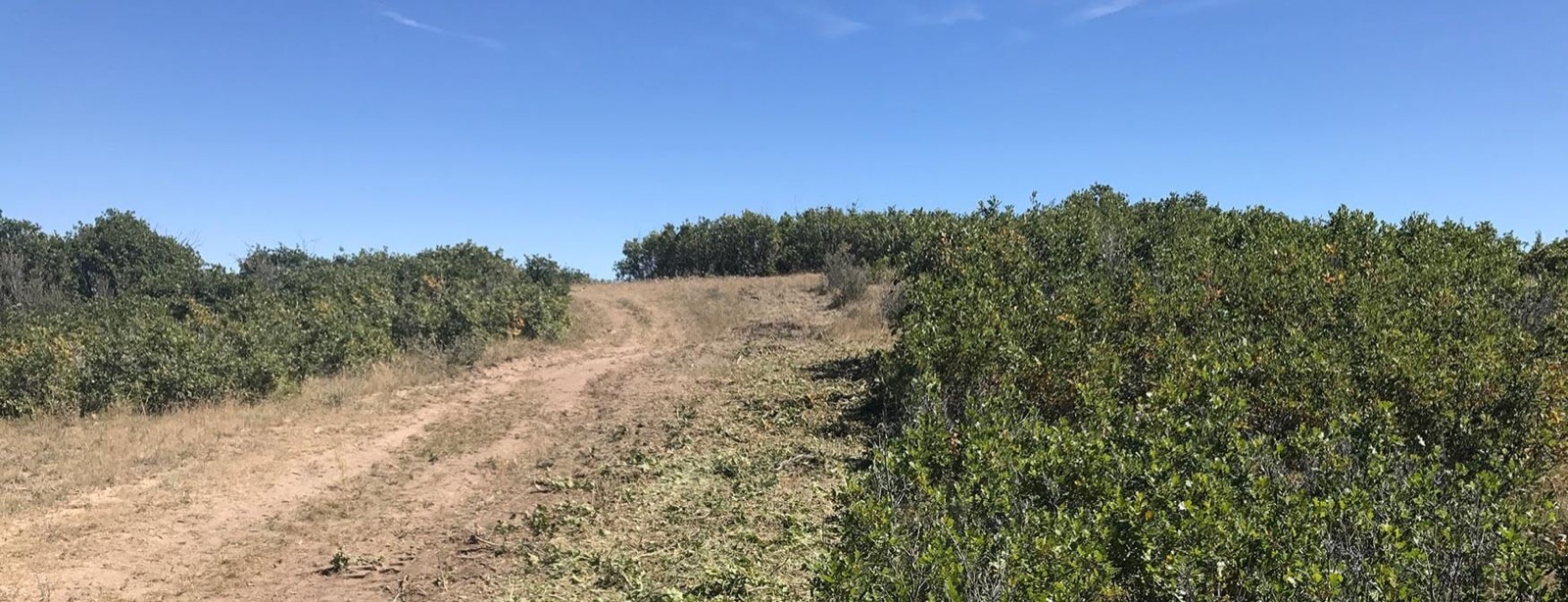
Managing Oak Like a Crop, Not a Catastrophe
Sedalia sits where the Plum Creek valley meets the mountain front, and the oak follows that seam for miles. Landowners here don't ask me to make it disappear, because most of them have lived with Gambel oak long enough to know better. It's clonal, it resprouts from underground lignotubers after every cutting, and a promise of permanent removal is a promise from someone who won't be around for the callback. What actually works is management: treating oak like a crop you harvest on a cycle rather than an enemy you defeat once.
A managed rotation looks like this. The first mastication pass takes mature thicket to mulch. Regrowth flushes for two or three seasons, soft and low. A return pass, faster and cheaper than the first, resets it again. Each cycle drains a little more of the root system's stored energy, and the stand gets easier to hold every round.
The economics reward the rotation. First-pass work on heavy oak is priced like heavy oak deserves. Maintenance passes on two-year regrowth run far lighter, because the machine moves at walking speed through soft sprouts instead of chewing wrist-thick stems all day. Clients who hold their cycle pay less per decade than clients who let the ground relapse and start over from scratch, and I put both numbers in front of you before you choose.
WORKING LAND
Lanes for Cattle, Trucks, and Fire Engines
Most Sedalia parcels I work are working land: horses, a few cows, hay meadows, equipment sheds. Oak interferes with all of it. Thickets swallow fence lines, cut pastures into awkward pieces, and close off whole corners of a property to grazing. So a lot of my work here isn't framed as fire mitigation at all, even though it doubles as exactly that. It's cutting lanes.
A mulched lane through oak country does several jobs at once:
- Moves livestock between pastures without a horse-swallowing detour
- Opens fence lines so you can actually inspect and repair them
- Gives trucks and trailers access to the back of the property
- Doubles as a fuel break and an anchor line if fire ever comes
- Lets an engine reach the far side of your ground instead of watching it burn
Grazing helps hold the lanes too. Cattle and horses browse young oak sprouts, and regrowth that gets grazed comes back slower. The machine and the livestock end up working the same rotation.
THE GROUND
From Jackson Creek to the Rampart Range
My Sedalia work runs the whole gradient. Down in the Plum Creek valley the oak mixes with meadow edges and cottonwood bottoms, and the mulching is fast, flat, and cheap per acre. Up Jackson Creek Road and toward Rampart Range Rd the ground steepens, the oak thickens into true mountain brush, and machine work gets slower and more deliberate. Same plant, very different day rates of progress, which is why I quote from a walk-through instead of an acreage number over the phone.
The higher ground is also where oak management matters most for fire. Those west-side parcels sit against National Forest with a long fetch of continuous fuel above them. Breaking up the oak on the private side of that line is the one lever an owner controls, and a maintained break beats an abandoned one every single year.
Water plays into the calculus on ranch ground too. Oak thickets are heavy drinkers, and seeps and stock ponds below mountain-front brush sometimes recover noticeably after the vegetation above them gets knocked back. I won't promise hydrology, no honest operator would. But landowners here have watched their tanks and springs long enough to know the brush and the water table are in conversation with each other.
THE CYCLE
A Return Schedule Your Budget Can Live With
Here's how I structure multi-year clients. The first pass is the big spend, priced per the ground we walk. Then we set a return interval, usually every two to four years depending on moisture, elevation, and how tidy you want the place, and I price those maintenance passes up front. They're predictable, they're smaller, and they land on the calendar so the oak never gets ahead of you again. Some ranch clients have me back the same month every other year, like any other scheduled chore on the place.
There's no contract trap in any of this. Every pass is quoted, done, and paid on its own, cash or check. Skip a cycle if money's tight and we pick back up where the oak is. The plan serves the land, not the paperwork.
Season matters less than people fear, but it's worth knowing. A grind right after full leaf-out hits the clone hardest, since the roots have just spent their reserves pushing new growth. Winter work on frozen ground is easiest on pastures and gates. Fall after the grass cures gives the best visibility for careful work around fences. Any of them beats postponing, and ranch maintenance passes book easiest on the shoulder seasons when the fire-country calendar loosens.
START HERE
Walking Your Ground Before the Next Flush
I'm based in Larkspur, ten minutes down the frontage road, and Sedalia is about as local as my work gets. If you've got oak crowding pasture, fence, or homesite, request a walk-through on the quote page and I'll bring a map and a straight opinion about what a rotation for your ground looks like. The service areas page shows the rest of my coverage if you've got family land elsewhere along the Front Range.
Free Quote · No Obligation
Clear the fuel before fire season, not during it
Or call the shop: (719) 400-9104