
Wildfire Mitigation: Designing Zone 1
Zone 1 is the first thirty feet around your house, and in Colorado Springs' westside neighborhoods it's usually the difference between a save and a loss. Designing it well takes more thought than mowing and hoping. Here's how I approach it on the ground the city actually sits on.
ZONE 1
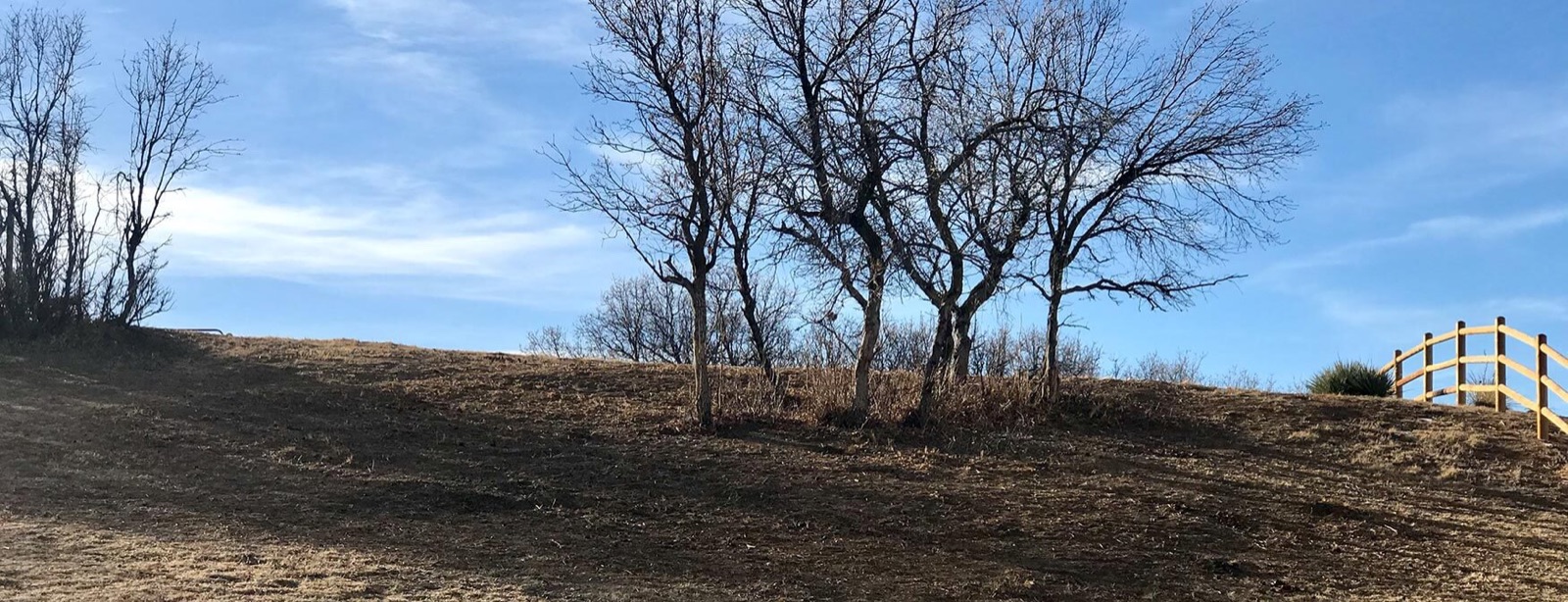
The First Thirty Feet Do Most of the Deciding
Fire science divides the home ignition zone into rings, and the inner ring earns the obsession. Within thirty feet of your walls, the design goal is simple to state and demanding to execute: nothing that lets flame stand tall, and nothing that catches and holds embers. Grass stays short and green or goes to hardscape. Shrubs become isolated islands with space between them, never a connected bed running toward the house. Tree limbs come up off the ground and away from the roofline. Woodpiles, dead plants, and resin-heavy evergreens exit the zone entirely.
Design it like you're denying fire a place to sit. Embers will land in Zone 1 during any nearby fire, thousands of them. The design question is whether they land on something that feeds them.
Materials count as much as vegetation inside this ring. Fences are the classic miss: a wooden fence tied to the house is a fuse with pickets, and swapping the last section for metal breaks it. Same thinking for the deck, the shed lean-to, and the trellis. Good Zone 1 design treats everything attached to the house as part of the house.
Water helps in this ring too, cheaply. Irrigated, mowed grass is one of the best fire surfaces a Front Range yard can have. Xeriscape works equally well when it's rock-mulched and maintained. The failure mode is the middle path: unwatered plantings on bark going crisp by August.
THE EDGE
One Long Fuel Line From Broadmoor Bluffs to Peregrine
Colorado Springs has one of the largest wildland-urban interfaces of any city in the country. Trace the western edge: Broadmoor bluffs and the scrub oak hillsides above them, up through the Westside, Cedar Heights gated against the mountain, Rockrimmon and Ute Valley's open-space fingers reaching between subdivisions, Peregrine against the foothills, Mountain Shadows below Queens Canyon. Every one of those neighborhoods touches continuous Gambel oak, and oak is the story of Springs mitigation. It grows in dense clonal thickets, cures by late summer, resprouts after every cut, and connects open space to backyard in one unbroken fuel bed.
The city's open-space parcels get some treatment. The private lots between them are the gaps in the armor, and fire doesn't check parcel maps.
Each neighborhood's geometry sets its exposure. Rockrimmon and Ute Valley wrap around open space, so fuel approaches from inside the city, between the houses. Cedar Heights and Peregrine face the mountain directly and take the wind first. The bluffs above the Broadmoor stack homes over oak slopes where fire climbs toward foundations. Knowing which geometry is yours tells you where your first dollar of mitigation goes.
JUNE 2012
What Mountain Shadows Settled the Argument About
When the Waldo Canyon Fire came over the ridge on June 26, 2012, it entered a neighborhood, not a forest. The homes that burned, hundreds of them, mostly ignited from embers and house-to-house spread, and post-fire analysis walked street by street documenting why one house stood while its neighbor didn't. Defensible space, roof and vent condition, and what sat in the first few feet around each structure kept showing up as the dividing line. The city rebuilt with stronger WUI rules because the evidence was sitting right there in the ash pattern.
For everyone still living along that edge, the fire's lesson is oddly hopeful: preparation showed up in the outcomes. It wasn't random.
The city took the lesson institutionally too. Colorado Springs Fire runs one of the country's more serious municipal wildfire programs, with parcel-level risk information and neighborhood mitigation support. Look your own address up and see how the professionals rate it. That rating is also increasingly what insurers look at, which makes documented mitigation a financial issue as much as a safety one.
BEYOND THE YARD
Oak Slopes, Greenbelts, and the Work Past Zone 1
Zone 1 design fails if a thirty-foot wall of mature oak stands at foot thirty-one. So the outer zones carry the heavy work: thinning and grinding the oak on the slope behind the fence, breaking the thicket into islands, removing the dead material underneath. This is machine territory. My tracked Rayco mulcher takes oak stands down and grinds them into mulch in place, no piles on your hillside, no debris trucked through the neighborhood. The mulch mat also slows oak resprout and holds the slope, which matters on the decomposed granite behind half these subdivisions.
Expect maintenance. Oak returns, and a three-to-five-year regrind cycle is the honest schedule, cheaper each round because the material is lighter.
Slope work behind these neighborhoods rewards tracks specifically. The grades above the Broadmoor and behind Cedar Heights defeat wheeled equipment, and hand-crew-only treatment on big oak slopes takes weeks a fire season may not grant. The tracked machine splits the difference: hand-crew finesse it isn't, but it treats an acre of steep oak in the time a crew spends staging.
GET IT DONE
Bringing the Machine to the City's Edge
Mitigation on the Springs' edge works best as a rolling habit rather than a crisis response. The owners who fare best treat their lots on a cycle, keep photos, and know their district contacts before the smoke column shows up. Getting the first machine pass done is what starts that cycle.
I'm an owner-operator based just north in Larkspur, and the Springs' westside is bread-and-butter ground for me. City lots, HOA slopes, and open-space-adjacent acreage all work; the site visit sorts out access and scope, and the quote is flat. Payment is cash or check when the work's done and walked. Start at the quote page, and if oak is your main event, the scrub oak page shows exactly what grinding it looks like. Reach me at (719) 400-9104 for the conversation version.
Free Quote · No Obligation
Clear the fuel before fire season, not during it
Or call the shop: (719) 400-9104