
Scrub Oak Removal in Monument, Colorado
Monument's fire problem stacks in layers: grass, then Gambel oak, then ponderosa crowns, all connected on the windy spine of the Palmer Divide. The oak is the rung in that ladder you can actually remove. I masticate oak understory in Woodmoor, Kings Deer, and the surrounding tree country without tearing up the pines you bought the lot for.
LADDER FUEL
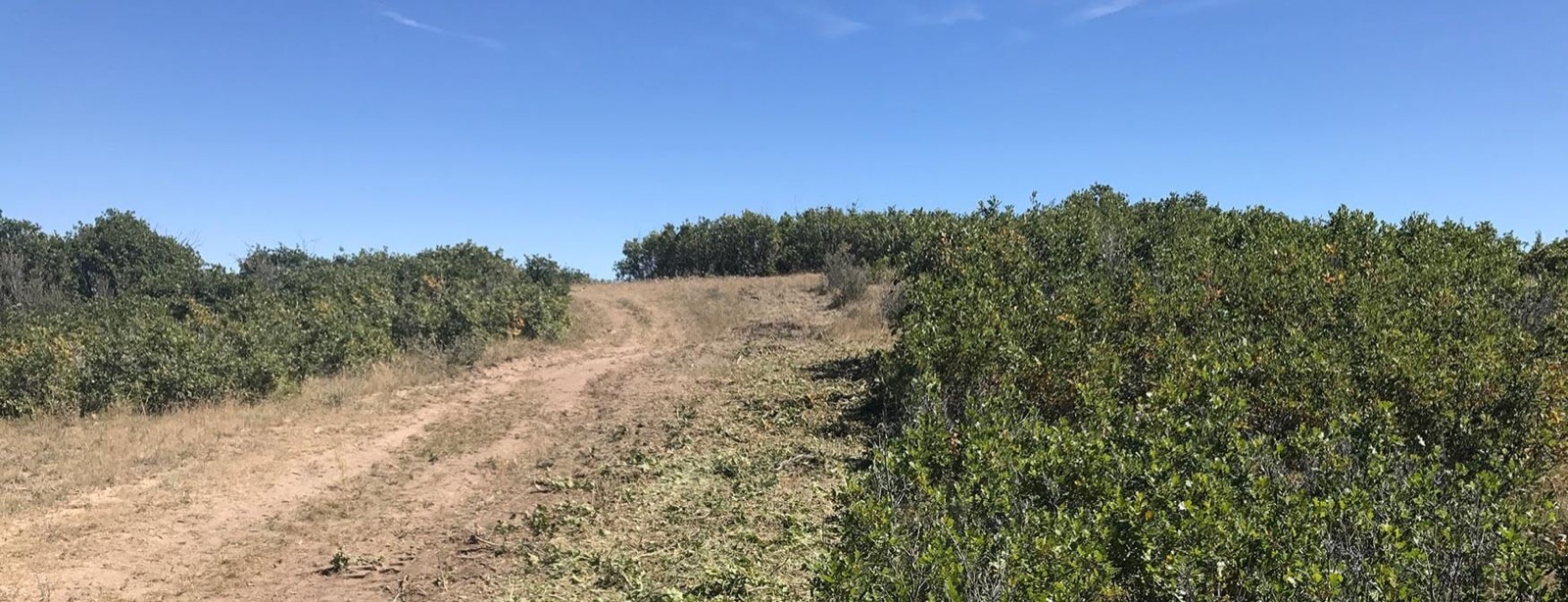
The Understory Problem Under the Pines
Stand in a Woodmoor backyard and look at what's actually growing there. Big ponderosa up top, healthy and wide. Underneath, filling every gap between trunks, a green mat of Gambel oak six to ten feet tall. That arrangement is what firefighters call ladder fuel, and it's the single biggest fixable hazard in Monument. Grass fire alone stays low and survivable. But let it climb into oak, and the oak's oily leaves flare hot enough to torch the pine crowns above. Once fire is in the crowns, nobody's stopping it at your property line.
Pull the oak out of that stack and the ladder collapses. Fire that reaches your trees stays on the ground, where crews can fight it and mature ponderosa can mostly shrug it off. Their thick bark evolved for exactly that. It did not evolve for a crown fire fed from below.
There's a density threshold where this gets urgent. Scattered oak clumps under widely spaced pines are a manageable landscape. A closed oak layer under a closed pine canopy is a stacked fuel bed waiting on one bad afternoon. Most Monument lots I walk sit somewhere in the middle, drifting toward the second condition a little more each wet year, and the owners who act while the drift is slow pay far less than the ones who let it finish.
THE DIVIDE
Elevation, Wind, and the Palmer Divide
Monument sits on high ground, seven thousand feet and change, on a divide that makes its own weather. The wind events here are famous for snapping trees and peeling shingles, and wind is the variable that turns a brush fire into a disaster. A fire pushed by a Palmer Divide gale doesn't walk, it runs, and it throws embers far ahead of the flame front. Dense oak understory catches those embers like a mitt.
Elevation cuts the other way too. Oak up here grows a bit slower than it does at six thousand feet, which means mitigation work holds longer between maintenance passes. Grind a thicket in Kings Deer and you'll get more quiet years out of it than the same work would buy in the foothills south of town. Same machine, same day of work, better mileage.
Snow is the divide's other signature. Monument catches storms that miss the city entirely, and a heavy spring dump snaps oak stems and pine limbs alike, adding dead material to the understory every few years. Dead stems standing inside a live thicket are the driest fuel on the lot. So part of any understory pass I make up here is chewing through that accumulated breakage, not only the green growth.
TREE CARE
Grinding Oak Without Wounding the Ponderosa
The whole point of understory work is keeping the trees, so the machine can't be casual around them. I work the mulcher head low and controlled between trunks, leave a respectful buffer at the bark, and finish close-in stems by hand where the spacing is tight. Bark damage invites bugs and disease into exactly the trees we're trying to protect, and I treat avoiding it as part of the job description, not an upcharge.
Root zones matter as much as bark. A tracked machine spreads its weight instead of compacting soil the way loaded trucks do, and the mulch layer left behind shades roots and holds moisture through Monument's bone-dry autumns. Owners tell me their pines look better a couple of years after understory removal. That's not magic. The oak was competing with them for every drop of water, and now it isn't.
NEIGHBORHOODS
Woodmoor, Kings Deer, and the Wooded Lots Between
Most of my Monument work lands in the big wooded subdivisions: Woodmoor's older tree-heavy lots, Kings Deer's two-and-a-half acre parcels, and the custom-home country out toward Higby Rd and the county line. These neighborhoods were platted inside a forest on purpose, and their firewise committees have been pushing residents toward exactly this kind of understory work for years. If your association wants the completed scope described in writing, that's routine and free.
A typical two acre understory job runs a day or two depending on oak density and how many hand-cut stems the tree spacing forces. What you're left with is the forest you actually pictured when you bought: big pines, open ground, long sightlines, mulch where the tangle used to be.
Access in these subdivisions is generally kind, which helps your price. Most Woodmoor and Kings Deer lots let the machine walk straight off the trailer and into the trees, no fence panels pulled, no craning over obstacles. Where lots share unfenced boundaries, neighbors sometimes book back-to-back days and split the mobilization, and the shared edge gets treated as one continuous piece of forest. Which, as far as fire is concerned, it always was.
MOVING FORWARD
Booking Understory Work North of the County Line
I'm based in Larkspur, one exit up the interstate, so Monument scheduling is easy and mobilization cost stays small. I'll walk the lot with you, flag what gets ground and what stays, and hand you one firm number. Cash and checks. And oak grows back from the roots, always, so I'll tell you plainly what a maintenance pass in a few seasons will cost before you ever book the first one.
Start at the free quote page, or call (719) 400-9104. If your lot needs pine thinning along with oak removal, I do that too. Read about my forest thinning work and we'll scope both in one visit.
Free Quote · No Obligation
Clear the fuel before fire season, not during it
Or call the shop: (719) 400-9104