
Scrub Oak Removal, El Paso Co
Drive El Paso County from Ute Pass to the Black Forest plateau and one plant keeps showing up under everything: Gambel oak. It's the county's signature ladder fuel, and managing it is most of what wildfire mitigation means here. I masticate oak on unincorporated acreage county-wide, one tracked machine, no piles, no burning, no haul-off.
COUNTY FUEL
One Shrub Runs the Whole Risk Map
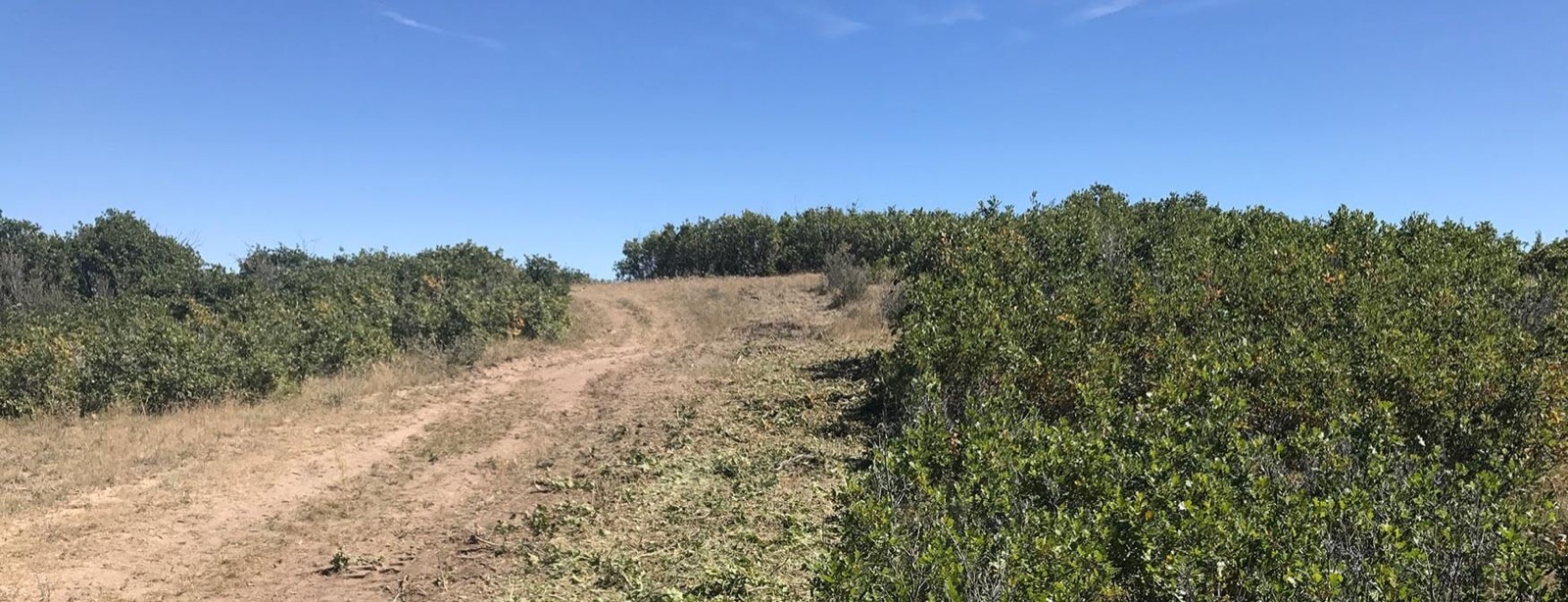
Every county along the Front Range has a fire problem, but El Paso County's has a name: Quercus gambelii. Scrub oak carpets the foothills west of the Springs, chokes the drainages around Monument and Palmer Lake, fills the understory across Black Forest, and lines the canyon country out toward Ute Pass. Pull up any wildfire risk map of the county and the red zones trace the oak almost exactly. Grass starts fires here. Oak is what turns them into events.
The mechanics are simple and ugly. Oak stands a body length or two tall, grows in continuous thickets, and carries flame from ground level into tree canopies. Its leaves are loaded with volatile oils that flare like nothing else on the landscape. Cutting that link out of the fuel chain is the highest-value mitigation work available in this county, full stop.
There's history behind the pattern. A century of fire exclusion let oak thicken across ground that periodic grassfire once kept open, and subdivision followed the scenery straight into the thick of it. So the county's homes and its heaviest brush now share the same foothill band. None of that is anybody's fault in particular. It's just the situation, and parcel-by-parcel mastication is the practical answer to it.
THE SPREAD
Ute Pass on One End, the Plateau on the Other
The county is huge and the oak wears different costumes across it. In the Ute Pass corridor around Cascade and Chipita Park it grows on brutal grades mixed with fir and pine. Along the western city edge it forms pure brush fields on sun-baked slopes. North on the Palmer Divide it slides in under ponderosa as ladder fuel, and out east it follows the creek drainages through otherwise open ranch country. I've ground oak in every one of those settings, and the machine work changes with the ground even though the plant never does.
What also never changes is the root system. Oak is clonal, resprouts after any cutting, and outlives every eradication fantasy. Honest mitigation aims at spacing and separation: oak pushed back from structures, thickets broken into islands, fuel continuity interrupted where it matters.
Access varies as much as the terrain does. Cascade and Chipita Park lots hang off switchback roads where parking the trailer is half the puzzle. Black Forest parcels swallow the machine easily but run big. And the rangeland east of the interstate hides oak down in creek cuts you can't see from the county road. I scout access on the walk-through, because a quote that ignores how the machine reaches the brush is a quote that changes later. Mine don't change.
RURAL LOTS
Acreage Outside the City Limits
Most of my El Paso County work sits on unincorporated land: five acres off a gravel road, twenty acres behind a ranch gate, the kind of properties where the fire department is volunteer and twenty minutes out on a good day. Owners out here carry their own risk, and they know it. The good news is that rural ground is efficient ground for a mulcher. Fewer fences, straighter runs, and per-acre cost drops fast once the machine is working open thicket.
A day of mastication on rural acreage typically buys you one of these, your choice:
- A hardened home ignition zone with oak pushed well off the structures
- A driveway corridor cleared wide enough for engines and evacuation both
- A fuel break separating your ground from a neighbor's untouched thicket
- An acre or more of solid oak knocked to mulch and reset to zero
Stack a few days across a couple of seasons and a raw parcel becomes a defensible one. Most of my rural clients build it out exactly that way, a piece at a time, in the order that protects the most first.
METHOD
Why Mulching Wins in This County
Burn piles need permits and patience, and half this county spends every summer under fire restrictions that park those piles for months. Hauling brush means truckloads and dump fees, and dozing means losing topsoil you'll miss for a generation. Mastication skips all three. Stems are ground where they stand, chips stay as ground cover, soil stays put, and the job is finished the day the machine leaves. There's nothing sitting on your land waiting to become a problem.
The mulch layer also suppresses the first flush of weeds and shades soil that El Paso County summers punish. Grass comes back through it within a season or two. Plenty of my repeat clients like the look enough that they'd choose it even without the fire argument.
Restrictions season is worth planning around. When the county tightens fire restrictions, burn-pile mitigation stops cold and every contractor who depends on burning backs up for months. Mastication keeps working straight through, which is why my summer calendar fills early. Owners who book grinding in spring have their mitigation finished before the dangerous stretch arrives. Owners who wait for July's first smoke scare join a long line.
COVERAGE
One Operator, the Whole County
I run this business alone out of Larkspur with a tracked Rayco, and El Paso County is half my working life. I quote from a walk-through, put the scope in writing, and take cash and checks. Check whether your corner of the county is in my normal rotation on the service areas page, then request a visit through the free quote page. If oak's your problem, you're in the right county to have found me.
Free Quote · No Obligation
Clear the fuel before fire season, not during it
Or call the shop: (719) 400-9104