
Scrub Oak Removal in Castle Rock
Castle Rock grew up around its oak draws instead of clearing them, and now those thickets run fence line to fence line through half the town's subdivisions. I grind Gambel oak in The Meadows, Founders Village, and Castlewood Ranch with a tracked mulcher that fits where big equipment can't. One pass, mulch on the ground, no piles and no smoke.
TOWN OAK
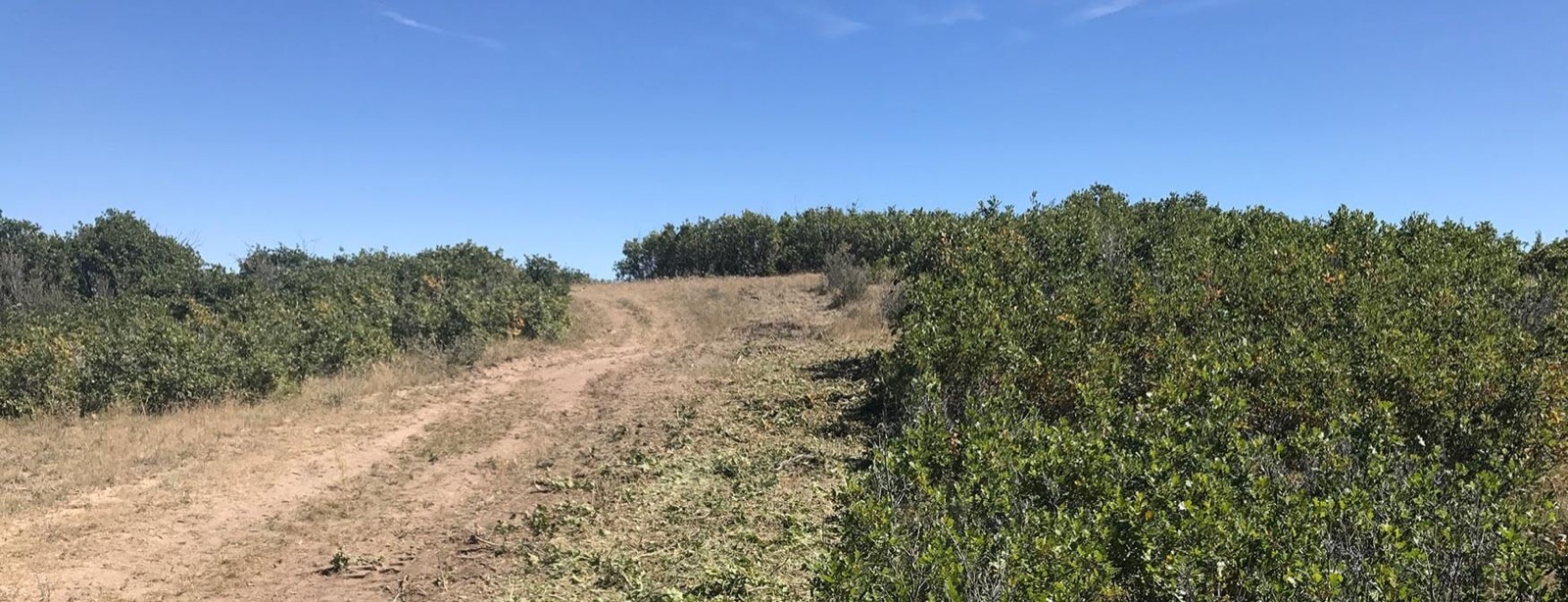
Oak Draws Threaded Through Town
Castle Rock did something unusual for a Front Range town: it built around its Gambel oak instead of blading it off first. Drive The Meadows, Founders Village, or Castlewood Ranch and you'll see the result. Green ribbons of oak running behind the fences, down the drainages, through the open space tracts, and right up against hundreds of back decks. It looks great in a listing photo. It reads very differently to anyone who understands how fire moves through continuous brush on a windy June afternoon.
Those draws are connected fuel. A thicket that starts three streets away can carry flame to your fence without ever touching a road. The fix isn't clearing the whole drainage, and nobody's asking for that. It's breaking the continuity where it meets your property, so the oak behind your house becomes a landscape feature again instead of a fuse.
Wet springs make it worse in a hurry. Gambel oak puts on real growth in a good moisture year, and a draw that looked tame when you closed on the house can be crowding the fence five summers later. Stems thicken from finger to wrist size, the canopy knits together, and a gap that fire couldn't cross quietly seals itself. Most owners don't register the change until the day they try to walk through it.
THE PRESSURE
The Letter From the HOA
A fair share of my Castle Rock calls start the same way: a courtesy notice from the HOA or a nudge from the town about vegetation on the lot. Covenant communities here take fuel seriously, and after the fire years this state has had, I don't blame them. But a letter tells you what to fix, not how. Homeowners grab loppers, fill six paper bags, and realize they've barely dented a clone that's been growing since before the neighborhood existed.
That's the point where a machine makes sense. I can take a quarter acre of mature oak to mulch in an afternoon, cut a clean edge that's easy to maintain, and leave the lot looking deliberate instead of hacked. If your HOA wants documentation, I'll describe the completed scope in plain language you can forward along. Most boards are thrilled someone actually did the work instead of arguing about it.
Deadlines matter with these notices, so tell me if you're working against one. Small in-town jobs slot into my calendar faster than acreage work, and I can usually get a Castle Rock lot handled within a couple of weeks of the walk-through, sooner in the shoulder seasons. Waiting until the week before a compliance date is how homeowners end up paying rush prices to whoever answers the phone first.
TIGHT QUARTERS
Working a Machine Between Fences and Sprinkler Lines
Subdivision work is precision work. I'm not spinning a mulcher head in open ranch country out here. I'm working between cedar fences, buried irrigation, drainage swales, playsets, and a neighbor's brand new trampoline. The Rayco is compact enough to pass through a standard double gate on many lots, and tracked, so it won't trench the lawn on the way in. Before I start, we walk the boundaries together and flag anything the chips shouldn't touch.
A few things I check on every Castle Rock lot before the head spins:
- Gate width and the straightest machine path from the street to the oak
- Sprinkler heads, valve boxes, and shallow drip line near the work zone
- Utility marks, window wells, and anything glass within throw distance
- Property pins, since oak thickets love to grow exactly on the line
And if a stem sits too close to a fence for the machine, I'll cut that one by hand and feed it to the head. The finish matters as much on a tenth of an acre as on forty.
STAYING AHEAD
Resprout Reality on a Subdivision Lot
Gambel oak regrows from its roots no matter who cuts it or what they cut it with. On small lots that's actually good news. The regrowth on a mulched quarter acre is a mowing and trimming problem, not a machinery problem. Knock the sprouts back once or twice a season for a couple of years and the stand loses steam. Skip it entirely and you'll have waist-high oak in three summers and a machine visit again in eight. I tell every client this up front because I'd rather you plan for it than be surprised by it.
Some owners keep a shaped remnant of oak on purpose, and I'm for it. A tidy island of oak, lifted off the ground and separated from the fence, gives you shade, screening, and birds without giving fire a route. Selective beats scorched earth in town every time.
GET A NUMBER
What Castle Rock Lots Cost to Clear
Pricing depends on three things: how much oak, how thick the stems, and how hard it is to get the machine to them. A typical backyard thicket runs a half day to a full day. Bigger perimeter jobs in Castlewood Ranch or along the open space edges take longer. I'm a one-man operation out of Larkspur, twelve minutes up the interstate, so you're not paying for a crew's overhead or a long mobilization.
I take cash and checks. Estimates are free and specific, never a range designed to grow later. Request one through my mitigation quote page, and if you want to see the kind of finish the machine leaves, the project gallery shows completed ground, not brochure photos.
Free Quote · No Obligation
Clear the fuel before fire season, not during it
Or call the shop: (719) 400-9104