
Fire Mitigation Sedalia
Sedalia is where Douglas County stops being suburban. Ranch ground climbs out of the Plum Creek valley into foothill ponderosa, and the fuel changes with every hundred feet of elevation. We clear it with a tracked mulcher, not burn piles.
THE GROUND
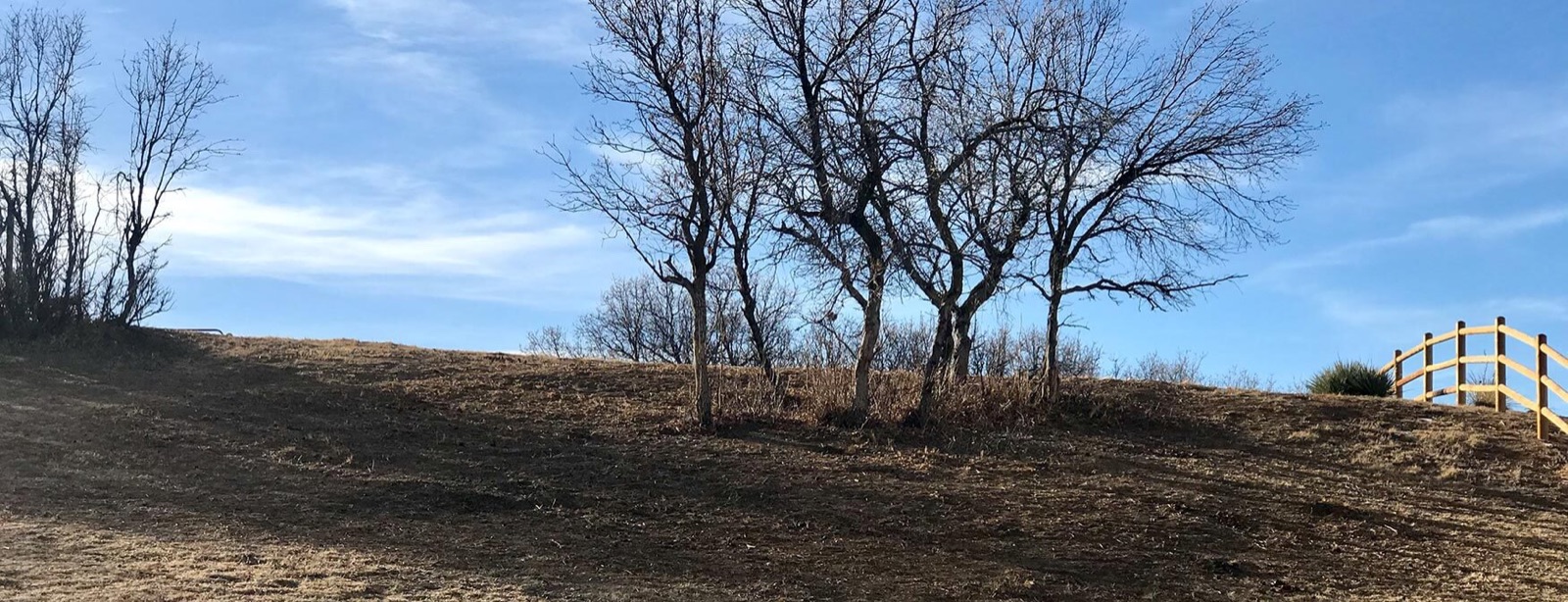
Ranch Country That Climbs Into Timber
Drive west out of Sedalia and you watch the fuel change through your windshield. Pasture grass along the Plum Creek valley gives way to scattered oak, then oak thickets, then ponderosa as Rampart Range Road climbs toward the national forest. Properties out here are big, ten to a hundred acres and more, and most of them hold every one of those fuel types at once. That's the Sedalia problem in a sentence. A grass fire that starts near the creek bottom has a continuous ramp of heavier and heavier fuel leading up to the timber, and houses sit all along that ramp.
Big acreage also means the work can't be done by hand at any reasonable cost. Nobody is lopping their way through forty acres of oak. This is machine country, and it's exactly what a forestry mulcher was built for.
The big Front Range fires ran through this same fuel progression, grass into oak into timber: Hayman in 2002 to the southwest, Waldo Canyon in 2012 down the range. Sedalia's exposure isn't hypothetical. It's a matter of ignition and wind lining up on the wrong afternoon.
DRAWS AND BOTTOMS
Creek Bottoms, Draws, and the Fuel They Hide
The dangerous fuel around Sedalia isn't always visible from the house. It sits in the draws feeding Jackson Creek and Indian Creek, in the brushy bottoms along Plum Creek, and on the north-facing slopes under Dawson Butte where oak and chokecherry grow dense because the snow lingers. Fire uses those corridors. A draw funnels wind, preheats the slope above it, and moves flame uphill toward ridgetop homesites faster than anything on flat ground. When we walk a ranch property, the draws are the first place we look, because that's where a fire would make its run.
The fix isn't stripping the drainage bare. It's breaking the continuity: grinding the brush into patches, opening gaps fire can't easily cross, and pulling fuel back from the structures and the ridgelines above.
WORKING LAND
Running the Mulcher on Working Property
Ranch land is working land, and we treat it that way. The tracked Rayco crosses pasture without rutting it the way a wheeled skid steer would, works fence lines without wrecking them, and grinds around gates, loafing sheds, and stock tanks with room to spare. We clear fence lines so oak stops shorting out hot wire and pushing rails over. We open up loafing areas and shade stands so the trees left behind are the healthy ones. And we cut fuel breaks along two-track roads so you can actually use them as fire breaks instead of brush tunnels.
We also coordinate around stock. If animals need to stay on the ground while we work, we sequence pastures so there's always somewhere for them to be, and we close gates behind us. It sounds basic. You'd be surprised how many contractors need it explained.
Everything gets ground where it stands. You keep the mulch as ground cover on your own soil, which beats watching topsoil blow off a scraped fence line. For bigger reshaping work, our land clearing projects page shows what multi-acre jobs look like when they're finished.
NO BURN PILES
Burn Piles Are a Liability Out Here
The traditional ranch method for slash is the burn pile, and we'd argue its time has passed. Piles wait months for permits and snow cover. They concentrate fuel into one hot spot on your land through the driest part of the year. Escaped pile burns start wildfires in Colorado every single season, and the landowner carries that liability. Mastication removes the whole question. The fuel is gone the day we grind it, converted to a mulch layer a couple inches deep that won't carry flame the way standing brush does. No permit, no smoke, no waiting, no pile.
And unlike hauling, nothing leaves. On a big Sedalia parcel, trucking slash out means dozens of loads and a beat-up ranch road. Grinding it in place means the machine does its work and drives away.
There's a soil argument too. Ranch ground out here runs thin and sandy in spots, and a mulch layer feeding back into it beats a burn scar sterilizing it. Five years after grinding, treated ground grows better grass than it did before we showed up.
THE MONEY
Slope, Access, and Where the Money Goes
On Sedalia acreage, price follows terrain more than acreage. Flat oak pasture grinds fast and quotes low per acre. The steep stuff off Rampart Range Road grinds slow and quotes higher, because the machine picks its lines carefully on grade. Density is the other big lever: scattered clumps versus a wall of ten-foot oak can double the machine hours on the same footprint. Access barely matters out here compared to town work, since most ranches have room to move, but a locked gate or a soft creek crossing still shapes the plan.
Big parcels also phase well. Plenty of Sedalia owners split the work across two or three seasons: house ring and draws the first year, fence lines and back pasture edges the next. The machine mobilizes fast, so phasing doesn't punish you the way it would with a crew that charges heavily just to show up.
Fire districts serving western Douglas County have run slash and cost-share programs in past years, so ask yours what's active before you schedule. Then have us walk the property. We'll flag the priorities, tell you what can wait, and put a real number on it through our quote page or at (719) 400-9104. Start with the draws and the ground below the house. The rest can follow in phases.
Free Quote · No Obligation
Clear the fuel before fire season, not during it
Or call the shop: (719) 400-9104