
Fire Mitigation In Zone 4
Zone four is the ground past your maintained defensible space: the extended fuel that decides how a fire arrives at your neighborhood in the first place. In Roxborough Park, zone four is continuous Gambel oak running against the hogbacks, and there's one road out.
ZONE FOUR
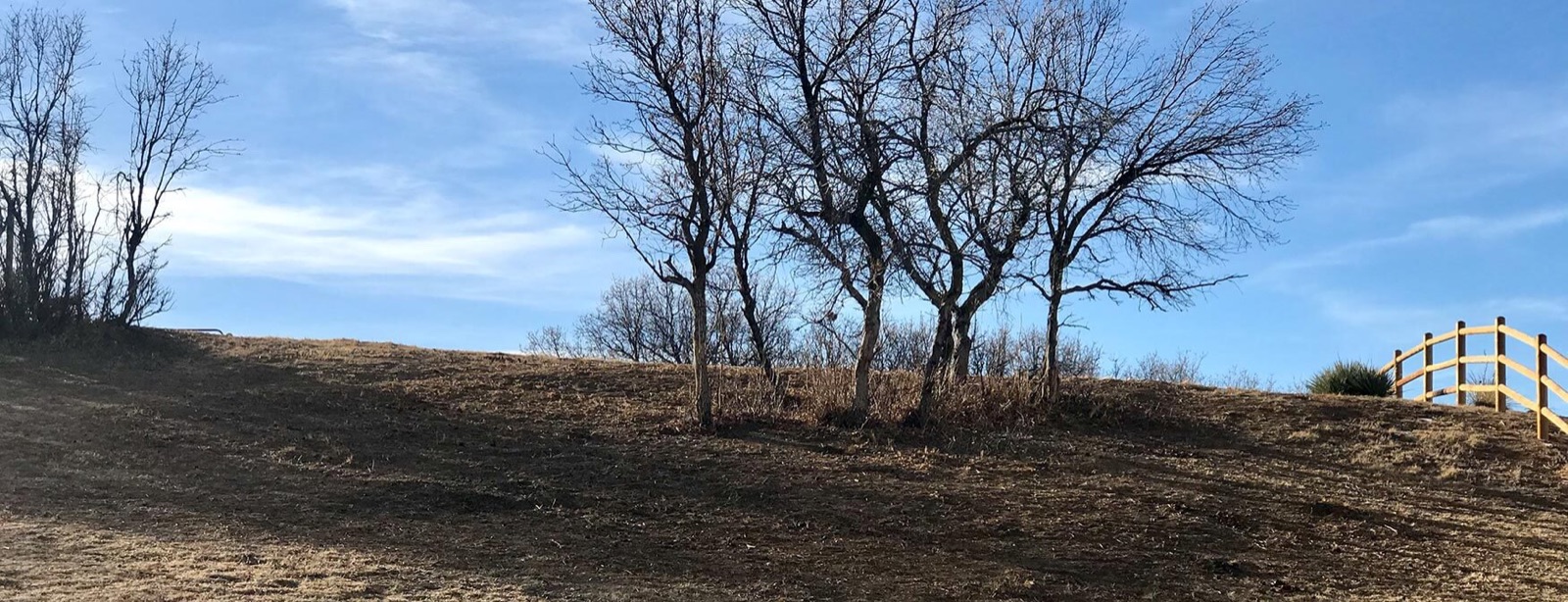
The Ground Past the Defensible Space Lines
Standard defensible space guidance covers the first hundred feet or so around a structure, and that work matters most. But fires aren't born at your property line. They arrive through the extended fuel beyond it, what planners sometimes call zone four: the greenbelts, the common ground, the unmanaged back acreage, the open space between your subdivision and the wild country. That extended zone sets the intensity of whatever eventually reaches the maintained zones. Treat it, and fire arrives at the neighborhood already weakened, on the ground, throwing fewer embers. Ignore it, and even well-mitigated homes get tested by a crown fire's full ember load. Roxborough Park's geography makes this zone-four conversation unavoidable.
The zone numbering varies by agency, and the label matters less than the idea: risk is layered, and the outer layers shape what the inner ones face. Roxborough's outer layer happens to be one of the most continuous oak beds on the Front Range, with Waterton Canyon's drainages adding wind alignment on the north end.
ONE ROAD
One Way Out of Roxborough
Roxborough Park has one primary road in and out. Every resident knows it, and every fire planner who looks at the community flags it. In an evacuation, everyone leaves through the same corridor at the same time, likely with smoke in the air and possibly with fire in the oak alongside the road. That single fact should shape how the whole community thinks about fuel. The oak flanking Roxborough Park Road and the internal streets isn't scenery in a fire scenario, it's the thing that determines whether the route stays open. Fuel breaks along the road corridor, and around the community's edges toward Waterton Canyon, buy time and keep the exit usable. That's zone-four work with the highest stakes possible.
For individual households, the road fact reorders priorities. Leave early. Have the go-bag done in April. And treat your own lot's fuel as a contribution to everyone's exit time, because in a community with one outlet, mitigation is genuinely collective.
THE OAK
Continuous Oak Against the Hogbacks
The setting that makes Roxborough spectacular is the setting that makes it flammable. The community sits directly against the red rock hogbacks of Roxborough State Park, and the Gambel oak here is continuous in a way few Front Range neighborhoods match: unbroken thickets running from the park boundary through the common areas and up to the home sites. Oak burns hot, regenerates from the roots, and carries fire uphill through the rock gaps with the wind behind it. And because the community backs onto protected parkland, the wild fuel next door will never be treated. The break has to happen on the community's side of the line. So the work is exactly what a masticator does best: grind the oak into patches and gaps, keep the mature trees and the views, and turn a continuous fuel bed into a broken one.
Oak has one more trick worth knowing: mast years. Every few seasons the acorn crop explodes, the scrub pushes new growth hard, and an untreated stand visibly thickens. If your slope looks denser than it did five years ago, that isn't your imagination.
COVENANTS
Mitigating Inside a Covenant Community
Roxborough Park runs on covenants, and vegetation work here involves approvals, boundaries between private lots and association ground, and standards about how finished work should look. We're comfortable in that structure. The mulcher's finished product helps the conversation: a treated slope reads as clean, mulched ground with healthy trees standing in it, not a bulldozed scar, and roots stay in place so the hillside holds. We can work to a written scope from the association or your fire district, and homeowners should ask both about current mitigation guidance and any chipping or cost-share help before scheduling. Douglas County has been active on wildfire programs in past seasons. If your lot needs the oak pushed back, our Douglas County scrub oak removal page covers that specific work in detail.
The state park boundary also means wildlife moves through constantly. We time work around nesting season where it's a concern, and patchy grinding, breaks and islands rather than blanket clearing, keeps browse and cover on the land. Good mitigation and good habitat overlap far more than people assume.
SCOPING IT
Pricing Work Against This Terrain
Estimates in Roxborough follow the ground. Oak density is the first driver, and here it's usually high. Slope is second: lots against the hogback formations climb hard, and steep grinding takes more machine time than the flats near the entrance. Access is third, since some back lots stage tight. What the estimate never includes is disposal, because nothing leaves. The oak becomes mulch where it stood, which on this erodible red ground is worth almost as much as the fire benefit. We walk every property, flag what stays, and quote the job as one number. Individual lots, shared boundaries, or association ground, the process is the same.
The tracked machine also matters for the rock itself. It picks lines around outcrops that wheeled equipment can't work near, which is most of why this community's terrain defeats general landscaping contractors. Fall through early spring is the easy season to book, and dormant-season grinding sets the oak back hardest. Summer works too. The oak doesn't get a vote.
If you look uphill from your deck at unbroken oak, that's the assignment. Start with a mitigation quote or call (719) 400-9104, and let's break the continuity while it's still a choice.
Free Quote · No Obligation
Clear the fuel before fire season, not during it
Or call the shop: (719) 400-9104