
Fire mitigation in Parker
Parker has two different fire problems wearing the same zip code. The west side is HOA suburbia backed up against pine and oak greenbelts. The east side is horse acreage with real fuel loads. We run the same machine on both, differently.
TWO PARKERS
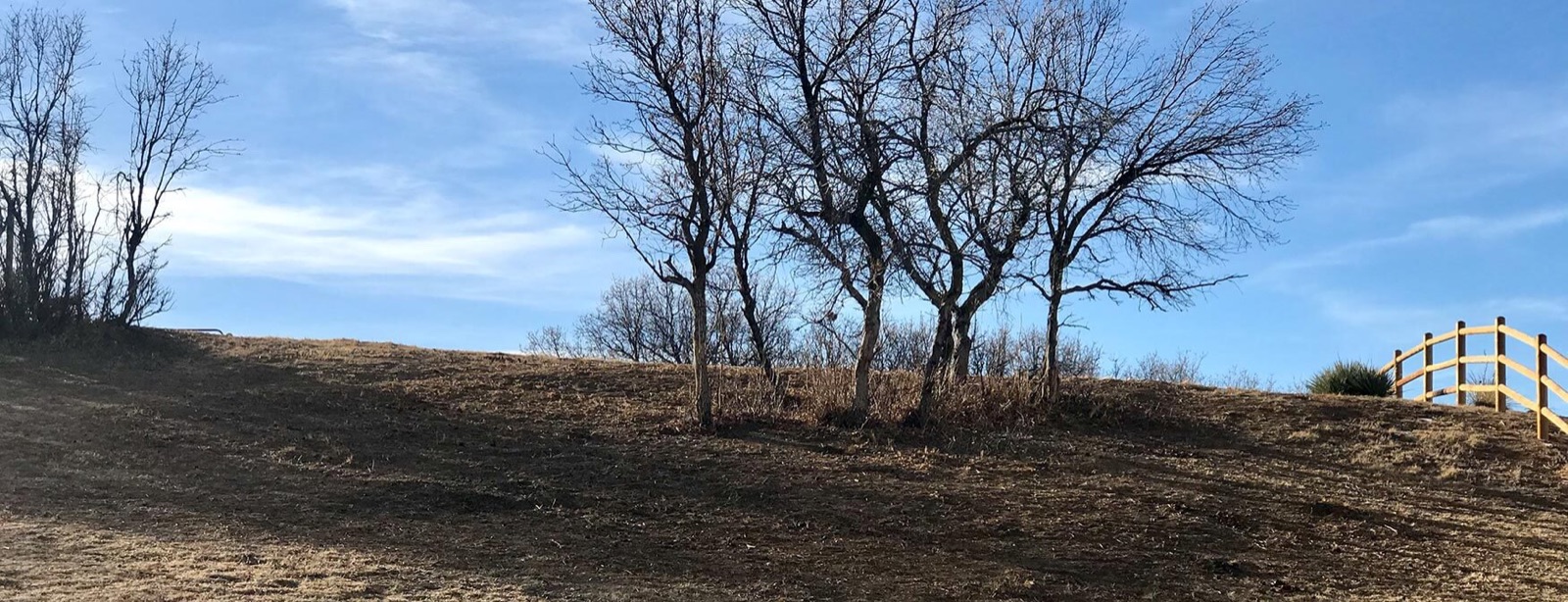
West Parker and East Parker Burn Differently
Look at a map of Parker and draw a line down Parker Road. West of it: The Pinery, Stonegate, Canterberry, dense subdivisions threaded with greenbelts, trail corridors, and open space. East of it, out Hess Road toward Elkhorn Ranch: five-acre-and-up horse properties with oak draws, unmanaged pasture edges, and real distance between hydrants. A fire behaves differently on each side. In the west, the risk is ember ignition and greenbelt runs that put flame against back fences. In the east, it's a wind-driven grass and oak fire with room to build speed before it reaches anything. Mitigation has to match the side you're on.
The mountain fires feel like someone else's story from a Parker backyard, but the Marshall Fire ended that comfort in 2021. Grass, wind, and suburban density were enough to destroy over a thousand homes in Boulder County in a single day. East Parker has the grass and the wind. West Parker has the density. So before anything else, figure out which fire you're mitigating against, because it changes the work.
THE PINERY
Oak Underneath The Pinery's Pines
The Pinery is the most forested neighborhood in Parker, and its name isn't decorative. Mature ponderosa shade the lots, and Gambel oak has filled in beneath them across decades. That understory is textbook ladder fuel sitting inside a subdivision, and the greenbelt fingers that make the neighborhood pleasant also connect that fuel from street to street. The same pattern runs along the Cherry Creek trail corridor, where cottonwood bottoms and cured grass form a continuous fuse through town. We grind oak understory out from under keeper pines, push brush back off fence lines, and leave the canopy and the character of the lot intact. The work is surgical, not scorched-earth.
And it's quick. A typical Pinery back slope is a one-day job, mulch left in place, no trailer loads of slash sitting at the curb waiting for a chipper crew.
Timing tip for the greenbelt neighborhoods: oak drops its leaves in October and holds its shape all winter, which makes cold-season grinding cleaner and easier on the surrounding landscaping. The greenbelt itself usually belongs to the HOA or the district, so your job ends at your line. Make your side of it count.
HORSE COUNTRY
How the Mulcher Handles Horse Property
East Parker acreage is working land, so we work it carefully. The tracked machine crosses pasture without leaving ruts, grinds oak out of fence lines without dropping debris into paddocks, and clears around barns, loafing sheds, and arenas with clean edges. Two things matter on horse ground. First, the mulch: we grind fine and keep it out of grazing areas you want clean, because nobody wants splinters in a dry lot. Second, the fuel breaks: a ground strip along the property line and around structures gives an approaching grass fire nothing to carry it, and gives you somewhere defensible to move animals. It's the difference between evacuating in panic and evacuating with a plan.
Fence lines deserve their own mention. Oak grows into wire out here, shorts hot fences, rots posts, and turns a property boundary into a fuel strip connecting your neighbor's problem to yours. We grind fence lines clean in one pass, and they stay walkable for years afterward.
Our brush clearing page shows the machine on exactly this kind of ground.
TIGHT LOTS
Small Yards, HOAs, and Careful Machine Work
Suburban Parker jobs are about precision more than horsepower. Backyard slopes in Stonegate and Canterberry mean gates, sprinkler lines, dog fences, and neighbors close enough to wave at. We've done plenty of it. The machine is compact enough for most residential access, and where it can't reach we finish by hand. HOAs in these neighborhoods often have their own rules about greenbelt edges and what homeowners can touch, so know your boundary before scheduling. We're happy to work to an HOA's written standard, and a finished mulched slope generally reads as tidy landscaping, which keeps the architectural committee off your back.
One habit worth building on small lots: look up before you look out. Overhanging branches touching the roof, and anything growing within five feet of the structure, matter more than the far corner of the yard. Handle the near zone yourself first, then bring us in for the slope and the heavy stuff.
One more suburban note: check with South Metro or your local district about chipping programs and mitigation guidance. The help on offer changes, but it's usually worth a call.
NEXT STEP
Getting a Parker Property Scoped
Every Parker quote starts with a walk, because the drivers differ so much between a Pinery backyard and an Elkhorn Ranch parcel. On small lots, access and detail work near structures set the price. On acreage, it's oak density and total footprint. Slope matters less here than in the foothills, which keeps Parker pricing on the friendly end of our service area. We'll flag what stays, mark what goes, and give you one number for the whole job: no haul-away fees, no burn permits, no slash piles. The fuel becomes mulch and stays on your ground.
So walk your fence line this week. If oak is touching it, or the greenbelt behind you hasn't been touched in a decade, request a mitigation quote or call (719) 400-9104. Fall and winter are the best times to grind oak, and the calendar fills up fast once smoke season starts.
Free Quote · No Obligation
Clear the fuel before fire season, not during it
Or call the shop: (719) 400-9104