
Fire Mitigation Monument
Monument sits at 7,000 feet inside one continuous ponderosa canopy that runs lot to lot from Woodmoor through Kings Deer and out the Black Forest edge. When canopy is continuous, crown fire is a neighborhood problem, not a property problem. Mitigation here is about breaking that continuity.
THE CANOPY
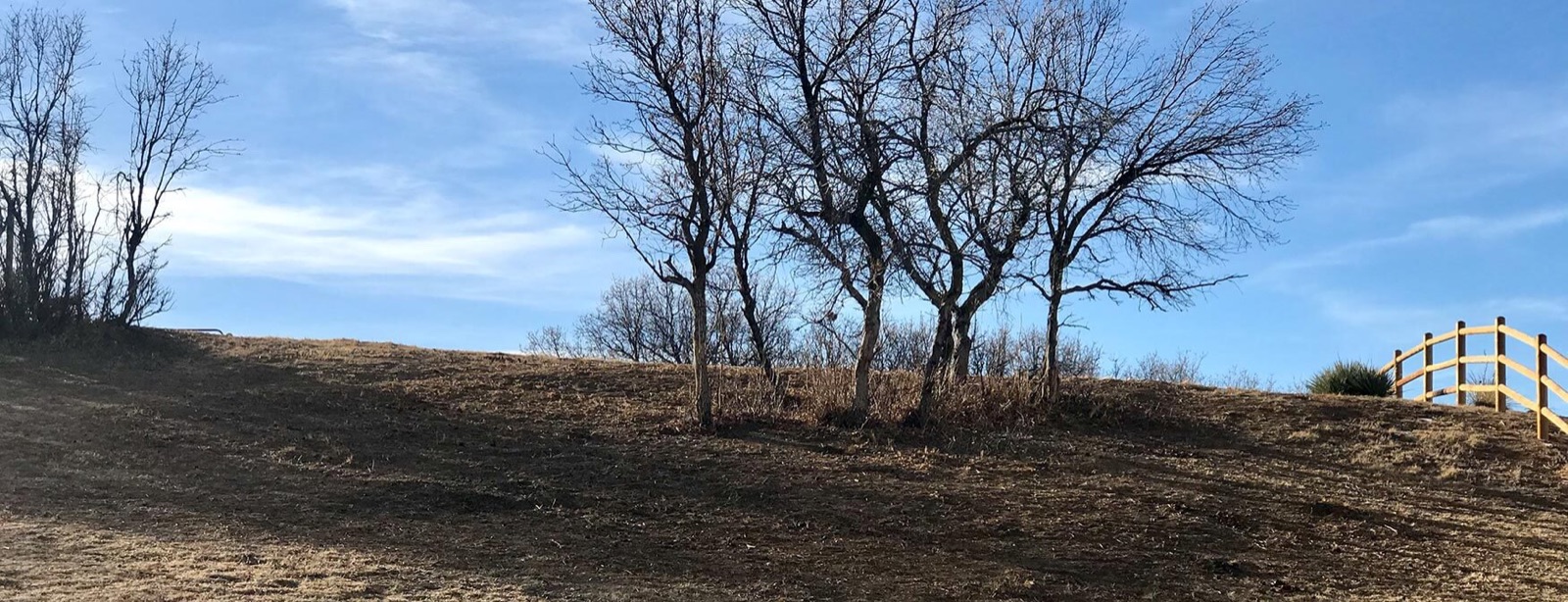
One Canopy From Woodmoor to Kings Deer
Fly over Monument and the town nearly disappears. What you see is forest: a contiguous ponderosa canopy running from the Woodmoor greenbelts through Kings Deer and Red Rock Ranch, along Higby Road, and east into the Black Forest without a meaningful break. It's why people move here. It's also the core fire problem. When crowns touch from one lot to the next, fire doesn't have to come to your property. It arrives through it, moving tree to tree, and no single homeowner's clearing stops a run that the whole street is feeding.
That doesn't make individual mitigation pointless. It makes it more valuable. Every treated lot is a gap in the fuel, and enough gaps turn a crown run back into a ground fire that crews can actually fight.
The elevation adds its own twist. At 7,000 feet the growing season is short, so trees grow slowly, stands stay dense, and the forest doesn't self-thin the way lower country does. Without management, Monument's woods just keep packing tighter every decade. Look at the stand density on any untreated lot here and you can read that history directly.
CROWN FIRE
Why Crown Fire Ignores Lot Lines
A crown fire needs two things: ladder fuel to climb into the canopy, and crown continuity to spread through it. Monument supplies both. Gambel oak and young pine grow up underneath the mature ponderosa, forming the ladder. And decades without thinning have left crowns interlocked across whole subdivisions. At 7,000 feet the fuels cure early, the winds come over the Palmer Divide hard, and the 2013 Black Forest Fire, a few minutes southeast of here, showed exactly what this fuel arrangement does. It killed about 489 homes across roughly 14,000 acres of the same forest type you're living in.
So the work is specific. Cut the ladder out from under the keepers. Open the crowns to ten feet or more of separation. Break the ground fuel into patches. None of it requires clearcutting anything.
Elevation also means the fire season starts sooner than people expect. The grass under this canopy cures with the first warm winds, and a surface fire in March is fully capable of finding a ladder. There's no safe month on the Divide, only quieter ones.
THE APPROACH
Thinning Without Scalping the Lot
Nobody in Kings Deer bought their lot to look at stumps. We get it, and it's not what mitigation asks for anyway. A healthy mitigated lot in Monument keeps its big ponderosa, loses the doghair thickets and the oak understory, and honestly looks better afterward: park-like, open, with the good trees finally visible. We walk the property with you first and flag every keeper. Then the tracked mulcher grinds the ladder fuel, the juvenile pine crowding the mature trees, and the oak clumps, converting all of it to mulch on the spot.
There are no slash piles drying next to your house afterward and no haul trucks. The mulch layer stays, suppresses regrowth, and feeds the soil. Our forest thinning page covers the approach in more detail, and most of the photos there could have been taken on either side of the Palmer Divide.
Snow doesn't stop the work, either. Frozen ground actually protects the soil while we grind, so winter is prime season up here. Spring mud is the only window we'd rather avoid. If you want the lot finished before summer, book it in the cold months and it'll be done before the first red flag warning of the year.
DISTRICT HELP
Cost-Share and District Help Around Monument
The Monument area takes wildfire seriously at the institutional level, and that works in your favor. Fire districts and county programs in this corridor have run chipping days, slash drop-off sites, and periodic cost-share funding for defensible space work. Programs change year to year and we won't pretend to know what's funded this season, so call your district and ask before you schedule anything. Some HOAs in the area also maintain their own mitigation standards and paperwork, and we're used to working inside those requirements. Bring us the checklist and we'll build the job around it.
If a district inspection or HOA letter has already told you what needs to happen on your lot, even better. That document becomes the scope of work, and the estimate gets very simple.
PRICING
How Monument Ground Prices Out
Monument jobs price on density and detail more than slope, because much of this plateau is workable grade. A lot with heavy doghair pine and interlocked oak takes real machine time. A lot that mostly needs understory cleanup goes quickly. Detail work near structures, wells, and buried utilities adds hours, and tight treed driveways in Red Rock Ranch or Woodmoor can slow staging. What you won't see on our number: haul-away fees, chipper crew day rates, or a burn-pile line item. The material stays as mulch, which is most of why mastication wins on cost here.
One more Monument-specific note: wind damage. The Palmer Divide's gusts snap and tip weakened trees, and dead or leaning stems inside a thicket are hazards worth removing while the machine is already on site. Point them out during the walk-through and we'll fold them into the same pass instead of a separate trip.
But the honest pitch isn't price. It's that a mulcher makes serious fuel reduction feasible on a normal homeowner budget, on a timeline of days. Walk your lot, look up at the crowns touching your neighbor's, and then get a real number through our mitigation quote page or at (719) 400-9104. The canopy isn't going to open itself.
Free Quote · No Obligation
Clear the fuel before fire season, not during it
Or call the shop: (719) 400-9104