
Fire Mitigation, Manutou Springs
Manitou Springs lives in the narrow space between three canyons and one burn scar. Fire risk and flood risk are the same problem here, and both start with what's growing on the slopes. I grind hazardous fuel into mulch on site, which treats the fire side without feeding the flood side.
THE SETTING
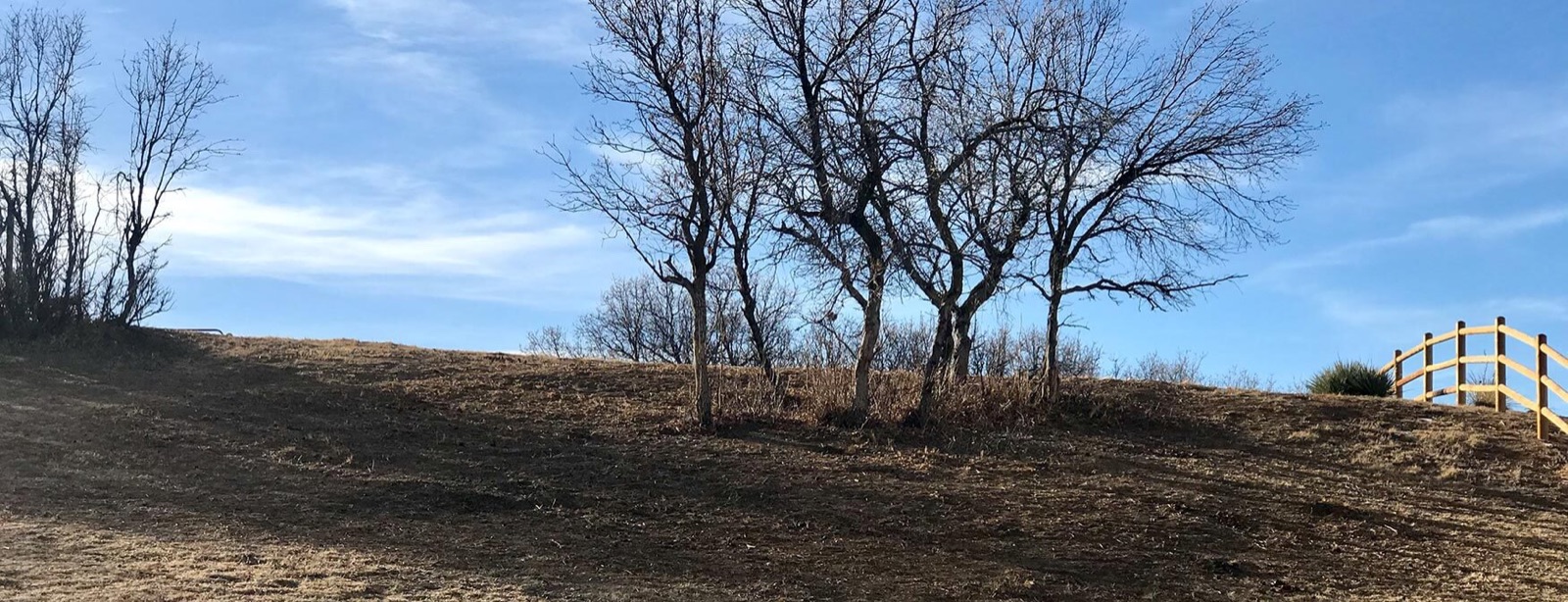
A Town Wedged Between Canyon Walls
Manitou sits where Ruxton Canyon, Williams Canyon, and the mouth of Ute Pass all come together. The slopes rise straight off the back fences: Gambel oak thickets, juniper, pinyon, and mixed conifer higher up, all of it steep and most of it never treated. Canyon geography works against you twice. Wind accelerates through the constrictions, pushing fire faster than it would move on open ground. And evacuation shares two tight corridors with tourist traffic that can gridlock Manitou Avenue on an ordinary Saturday, never mind an emergency.
So the margin for error here is thin, and the fuel on the hillside behind your house is the one variable you actually control.
Manitou's building stock raises the stakes further: closely spaced wood-sided homes, many over a century old, on streets where an ember-lit fire could move structure to structure. That's how the worst WUI losses happen nationally, and it's why fuel on the slopes above town is everyone's business, including people whose own lots are bare.
THE SCAR
Next Door to Waldo Canyon, and What Came After
The Waldo Canyon Fire burned in 2012 directly above and beside this town. Manitou escaped the flames that took Mountain Shadows, but it didn't escape the aftermath. The following summers, storms over the burn scar sent flash floods down Williams Canyon and Ute Pass, through downtown, with debris flows that closed Highway 24 and did real damage. That's the lesson Manitou learned in its own streets: fire on the slopes above a canyon town keeps costing money for years after the smoke clears.
Williams Canyon in particular showed how fast it happens. Rain that would soak harmlessly into vegetated ground came off the scar as a wall of water and rock, into a canyon that empties at Manitou Avenue. Businesses sandbagged all summer. Insurance adjusters learned local geography. Nobody in town needed the fire-flood connection explained twice.
Which is why mitigation method matters here as much as mitigation itself. Any treatment that strips slopes to bare dirt trades fire risk for flood risk. The right work reduces fuel while keeping the ground covered and rooted.
The town and county responded to those flood years with debris basins, drainage work, and warning systems, real infrastructure that helps. But engineering downstream can only catch what the slopes send. Keeping the hillsides vegetated, rooted, and low-fuel at the same time is the upstream half of the fix, and that's precisely the condition mastication leaves behind.
THE METHOD
Why Ground-Up Mulch Beats Bare Slopes Here
Mastication fits Manitou's geology better than any alternative I know. The machine grinds oak, juniper, and small trees into a mulch mat that stays right on the slope, intercepting raindrops and slowing runoff while the root systems below keep holding soil. Fire reaching a mulch bed slows to a creep. Rain hitting a mulch bed soaks in instead of sheeting off. Compare that with cut-and-scrape clearing, which leaves the exact bare surface that fed the Williams Canyon debris flows.
And there's the pile problem. Burn piles above a town this tight are a nonstarter, and hauling slash down these grades through downtown costs absurd money. Grinding in place means nothing burns later and nothing rides a truck through your neighborhood.
Gambel oak drives the maintenance schedule here like everywhere on the Front Range. It resprouts from the roots, so a ground lot needs a lighter follow-up pass every few years to stay treated. The regrind costs a fraction of the first cut because the material is young and soft. Budget for the cycle up front and the whole program stays affordable.
TIGHT GROUND
Small Lots, Steep Backyards, Careful Access
Manitou properties aren't ranchland. They're compact lots with historic structures, stone walls, retaining terraces, and neighbors close on both sides. The tracked Rayco is more nimble than people expect, and low ground pressure means it works slopes without tearing them up. But I'll be honest during the site walk about what the machine can reach and what needs handwork. Usually the answer is a combination: machine on the main slope, saw work in the corners, everything ground into the same mulch layer.
- Oak thickets against structures come out first. They're the fastest fire path to your walls.
- Junipers on terraces and foundations go next. They're ember magnets.
- The upslope band gets thinned for depth, because fire arrives here from above and beside as often as from below.
Historic-district considerations get respected too. Stone walls, old retaining work, and property-line quirks from the 1890s are part of working in this town, and the machine moves around them rather than through them. Slow is fine. Broken is not.
NEXT
Putting a Plan Together for Your Hillside
I'm one operator based in Larkspur, up the road past Monument, and Manitou is inside my regular working range. The site visit is free and worth doing even if you're not ready to book, because knowing your fuel picture costs nothing. Quotes are flat-rate for the defined work. Payment is cash or check at completion.
If you're weighing timing, do the work before monsoon season, not after. A slope treated in spring has its mulch mat settled and working by the time July storms arrive, which is when both the fire and the flood clocks run fastest in this town. Fall works too, and it positions you ahead of the next dry spring.
Start at the quote page, or see the brush clearing overview for how I treat oak and juniper country. Call (719) 400-9104 if your hillside is the kind you'd rather describe out loud.
Free Quote · No Obligation
Clear the fuel before fire season, not during it
Or call the shop: (719) 400-9104