
Prepare Home for Wildfires: Exterior Siding
Fire-resistant siding matters, and if you're re-cladding a Lakewood home near open space, choose it carefully. But siding is the last line of defense, and the first line is the grass and brush beyond your fence. We work on the first line.
HARDENING
Siding Buys Minutes, Cleared Ground Buys More
Home hardening is real. Stucco, fiber cement, and metal siding resist ember ignition far better than wood cladding, and vents, decks, and eaves matter just as much. If you're renovating a house against Green Mountain or Bear Creek open space, harden it. But understand what hardening does: it buys time against heat and embers that reach the structure. It doesn't reduce how much heat arrives. That's decided out in the fuel, in the grass and brush between the fire and your wall. A hardened house behind fifty feet of cured cheatgrass still catches embers in every gap and corner. A hardened house behind a wide mowed and mulched buffer usually never gets tested. Do both. But if you can only fund one this year, fund the buffer.
Siding choice still matters, so for the record: ignition-resistant cladding, ember-resistant vents, metal drip edges, and a clean roofline are the right spec for any home within reach of open space. Just don't let the renovation budget end at the wall.
THE GRASS
Cheatgrass Cures Early on Green Mountain
Lakewood's fire fuel is sneaky because it's green in May. Cheatgrass and other annuals flush with spring moisture, then cure to brown standing tinder by June, weeks ahead of native grasses. Green Mountain carries it across hundreds of acres, the Bear Creek corridor threads it through the city, and the interface edges at Solterra and Applewood put homes directly against it. Grass fire doesn't burn hot for long, but it moves shockingly fast in wind and it carries flame to whatever heavier fuel is waiting: junipers, fence lines, wood decks, brush draws. The Marshall Fire in 2021 was a grass-driven fire, and it destroyed more homes than any fire in Colorado history.
So Lakewood mitigation is mostly about the transition fuels: the brush, the volunteer trees, and the rank grass edges where a fast fire could become a hot one. Junipers deserve special mention: they're planted all over Lakewood, they hold dead interior needles by the pound, and firefighters call them gas cans for a reason. Any juniper touching a structure should go.
SEQUENCE
Harden the House, Then Work Outward
The right order of operations on an interface property is simple. Close the ember gaps on the structure: vents, deck skirting, roof valleys, the first five feet of ground. Then push outward. Mow and maintain the grass zone, remove or isolate the junipers and ornamental brush that sit against the house, and break up the heavier fuel out to your property line. That outer work is where we come in. The mulcher grinds brush, scrub, and small volunteer trees into a ground layer that won't carry flame the way standing fuel does, and it does it without haul trucks or burn piles inside city limits, which matters because open burning isn't an option here anyway.
City rules shape the toolbox generally. Chipping means dragging material to the curb, dump runs cost money and Saturdays, and debris piles draw code complaints. Grinding in place sidesteps the whole disposal chain, which is why mastication fits urban interface work so well.
For bigger fence-to-fence cleanups, our Colorado brush clearing page shows what the machine does with an overgrown parcel.
THE INTERFACE
Machine Work Along the Open-Space Edge
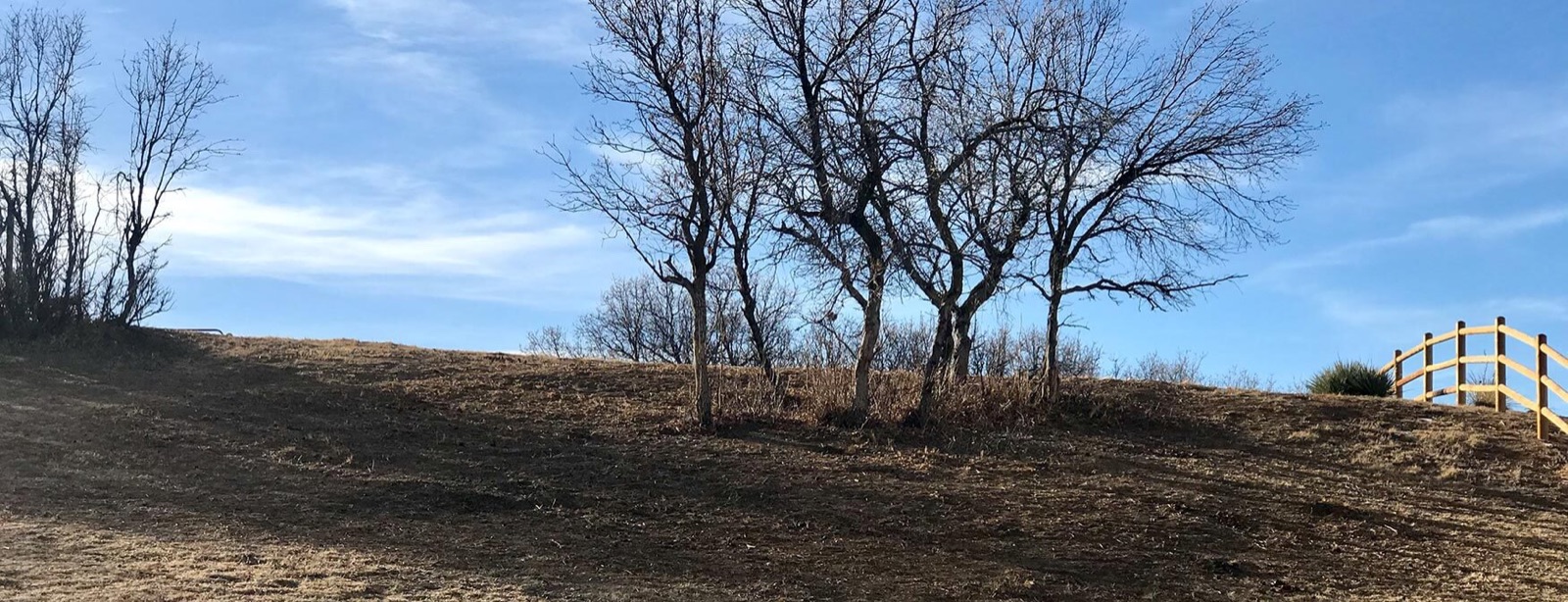
The properties we treat in Lakewood cluster along the open-space seams: back fences facing Green Mountain, lots dropping into the Bear Creek drainage, newer Solterra homes set against the hogback grass, and older Applewood acreage with decades of volunteer growth. The pattern repeats: city-managed open space that the homeowner can't touch, and a private strip of fuel between it and the house that nobody has managed in years. That private strip is where you have control. Cleared and mulched, it becomes the gap where a grass fire drops to the ground and loses its push before anything of yours is at stake. The machine handles slopes a mower can't, and the finished surface looks like landscaping rather than a scar.
The strip is usually narrower than people fear, too. Most Lakewood interface jobs treat a band a few dozen feet deep, not a whole hillside. A modest buffer, treated well and kept up, does the work.
UPKEEP
Keeping a Lakewood Buffer Working Year to Year
Grass fuel rebuilds every single season, which makes Lakewood mitigation a rhythm rather than a project. The heavy lift, grinding brush and volunteer trees, holds for years. The grass edge needs attention annually, ideally before the June cure. Most of our interface clients settle into a cycle: one machine pass to reset the property, then light maintenance passes every few seasons as brush tries to reestablish. Check with West Metro Fire or your district about current guidance and any community chipping or cleanup programs; the offerings shift, and a phone call is free. Price-wise, Lakewood work is driven by access and density more than slope, and most residential jobs finish inside a day.
One more habit: after every windstorm, walk the buffer. Downed limbs and blown-in tumbleweed rebuild a fuel bed faster than anything that grows there. Ten minutes with gloves keeps the strip honest between machine passes. It's the cheapest fire insurance in Lakewood, and nobody sells it. You just do it.
If your back fence faces open space, don't wait for a red flag warning to think about the strip behind it. Request a quote or call (719) 400-9104 and we'll walk it with you.
Free Quote · No Obligation
Clear the fuel before fire season, not during it
Or call the shop: (719) 400-9104