
Find Mitigation and Hoses
Every few site visits, someone shows me the hose setup they're counting on to save their house. I'd rather be straight with you than polite: a garden hose is the last layer of a defense, not the first. Here's what water can actually do during a wildfire, and what has to be true before it matters at all.
THE QUESTION
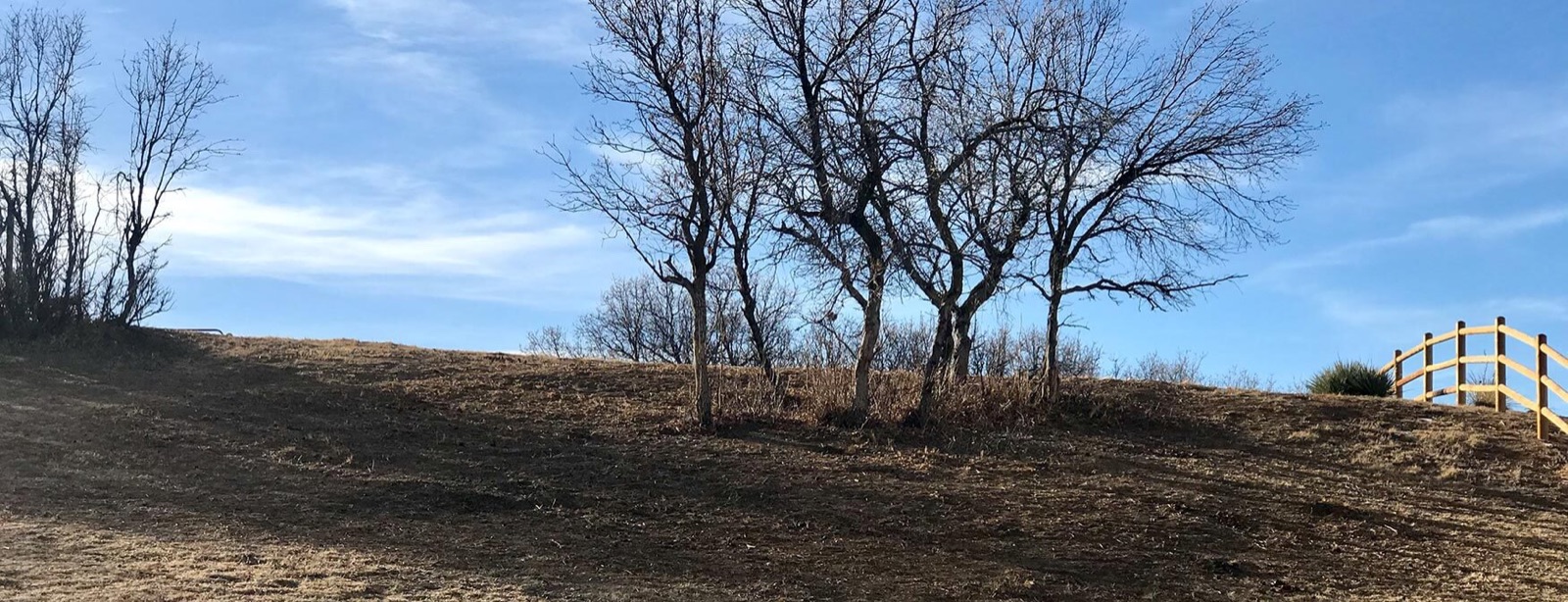
The Setup Everyone Asks Me About
The plan usually looks like this: a couple of hoses on quality reels, maybe roof sprinklers, sometimes a pump and a stock tank. And I get the appeal, because water feels like action. But run the scenario honestly. A crown fire arriving through untreated fuel brings radiant heat that ignites material from dozens of feet away, ember showers by the tens of thousands, and winds that turn hose spray into mist headed the wrong direction. You won't be standing in that with a garden hose. Evacuation orders will have you gone hours earlier, and staying is how people die.
So the honest question isn't whether hoses help. It's what has to be true about your property for any amount of water to matter. And that answer is always about fuel.
There's also the timeline problem nobody models. Wildfire approaches read in hours, sometimes minutes. Your hose plan assumes you're home, awake, healthy, and calm, with pressure in the line and time to work. Real evacuations happen at dinner, at 3 a.m., while you're at work with the gates locked. Fuel reduction protects the house whether anyone's home or not, and that's the difference between a plan and a hope.
SPRINKLERS
Where Exterior Water Genuinely Earns Its Keep
Exterior sprinklers have a real, narrow job: raising the moisture of your roof, decks, and the ground immediately around the house before the fire arrives, then dampening the ember rain after you've left. Set up hours ahead on a well-prepared property, that's meaningful. The catch is supply. A typical well pump pushes a handful of gallons a minute, and municipal pressure collapses during a fire when every neighbor opens every tap, which is documented in incident after incident. A sprinkler plan without a dedicated supply, a cistern or a big tank and a pump, is a plan to run dry in the first half hour.
Even done right, sprinklers protect a mitigated home. They dampen embers landing on short grass and mulch. They do nothing about a flame front rolling through continuous oak to your fence line.
If you do install one, do it to a standard: metal plumbing where exposure is worst, heads positioned for the roof and deck rather than the lawn, a pump sized to real head pressure, and a full test every year before the dry season. A system that half-works produces wet spots and dry confidence, and the second one is the dangerous product.
SUPPLY
Rural Water Truth: No Hydrant Is Coming to Save You
Out where I live and work, rural Douglas County and the foothills counties around it, there are no hydrants past the subdivision edge. Engine crews arrive with the water on the truck, several hundred gallons to a couple thousand, and when it's gone they drive to refill from a cistern, a pond, or a tender shuttle that may be serving twenty other properties. Departments know where every water source in their district is, and the gaps between those sources are measured in miles. That's the arithmetic your defense plan lives inside.
If you want to spend money on water, a marked, accessible cistern that a crew can draft from is worth fifty hose reels. Ask your fire district what they'd want on your lot. They'll tell you exactly.
Douglas County's growth makes this sharper every year. Subdivisions keep extending past the last hydrant, onto well-and-septic parcels in oak and pine where the nearest reliable draft point might be a pond two miles off. New residents from the city assume urban response norms. The fire districts out here are good, and they're covering enormous ground with the water they can carry.
THE CREW
What Firefighters Look for When They Size Up Your Lot
Here's the uncomfortable part. When engines roll into a neighborhood ahead of a fire, crews triage: this house is defensible, that one isn't, keep driving. The judgment takes seconds and it's based on what they see. Cleared space around the structure where a crew can work without being burned over. A driveway a fire engine can actually get in and out of, with turnaround room. Fuel condition in the first hundred feet. No propane tank buried in brush. Your mitigation isn't only protecting the house from fire. It's what makes your property worth an engine crew's risk.
A hose bib helps them. Cleared, mulched, workable ground around the structure helps them enormously more. Nobody makes a stand at a house wrapped in oak.
Address visibility belongs on this list too. Reflective numbers at the road, a gate code the district has on file, and a driveway without overhanging fuel let a crew find and reach you at night in smoke. These cost almost nothing on a weekend. They're also exactly what the mitigation assessments from your district will flag first.
PRIORITIES
Spend on Fuel First, Water Second
So here's my contrarian bottom line, and I hold it even though fuel work is what I sell: the hose-and-sprinkler budget only makes sense on a property that's already mitigated. Remove and grind the fuel, open the space, harden the structure, and then water systems move the odds. Skip the fuel work and the finest sprinkler rig on the market defends a lost cause. I do the fuel side with a tracked mulcher, grinding brush, oak, and small trees into mulch on site, and that's the layer that decides outcomes.
If your property's still in the unmitigated column, start with a free quote or look at the defensible space overview. Buy the hose after. It'll finally have something worth defending.
Free Quote · No Obligation
Clear the fuel before fire season, not during it
Or call the shop: (719) 400-9104