
Home Ignition Zones and Fire Mitigation in Evergreen
The home ignition zone concept says your house's survival is decided within about a hundred feet of its walls. In Evergreen, that hundred feet usually holds dense mixed conifer, and the roads out are narrow. Working those zones with a machine is the practical answer.
THE ZONES
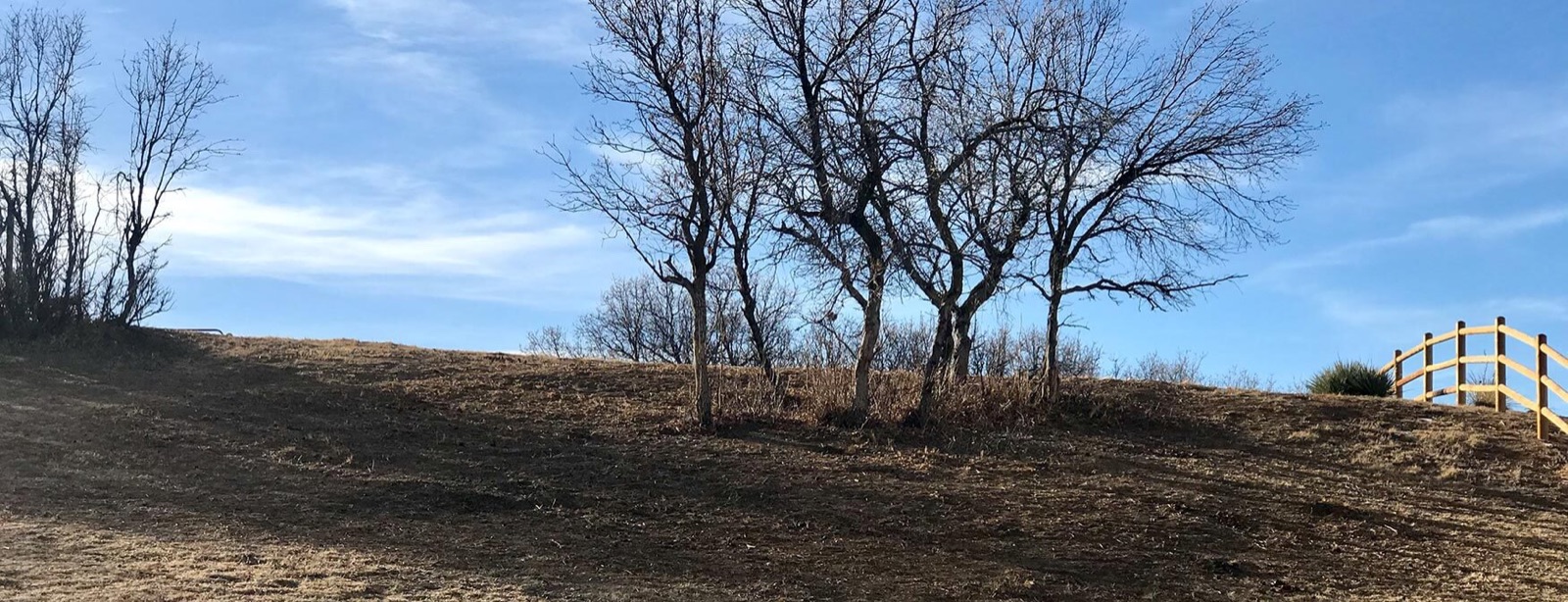
The Ignition Zones Around a Mountain Home
Fire science divides the ground around a house into zones, and the logic is worth knowing. Zone one is the first five feet: nothing flammable at all, no mulch against the foundation, no firewood on the deck, no juniper hedge. Zone two runs out to about thirty feet: trees limbed up, crowns spaced, grass short, brush gone. Zone three extends to a hundred feet and beyond on slopes: thinned forest where fire has to stay on the ground because it can't find a ladder. Most Evergreen properties fail in zones two and three, not because owners don't care, but because those zones hold serious timber and the work is beyond hand tools. That's the gap we fill.
Zone one, though, is homeowner work: gravel the first five feet, move the woodpile, swap the juniper for stone. Do that part yourself this month. The machine zones are two and three, and that's where the rest of this page lives.
THE FOREST
Dense Conifer From Kittredge to Brook Forest
Evergreen's forest is genuinely dense: mixed conifer stands where fir grows up under the ponderosa and lodgepole packs the north slopes. Upper Bear Creek, Brook Forest, and Soda Creek hold some of the thickest fuel in Jefferson County, and even the established neighborhoods, Hiwan and the streets around Bergen Park, carry more standing timber per lot than almost anywhere on the Front Range. Dense stands mean interlocked crowns, and interlocked crowns mean a fire that gets into the canopy stays there. Add the road problem: narrow, winding routes through Kittredge and up the creek drainages that make evacuation slow and simultaneous in a real event. The Lower North Fork Fire in 2012 burned just south of here and killed three people. This terrain doesn't hand out second chances.
Beetle kill adds to the load. Stressed stands up the Bear Creek drainage carry standing dead trees that torch like matchsticks and shed fuel with every windstorm. Getting ahead of the beetles means thinning while the stand is still green, because a thinned stand is a better-watered, more resistant one.
ZONE WORK
Working Zone by Zone With a Tracked Machine
Here's how the zone model translates to machine work on an Evergreen lot. We walk the property and flag keepers with you first. Close to the house, the work is careful and partly by hand: clearing the near zone, limbing, taking out the brush and small trees crowding the structure. From thirty feet out, the mulcher earns its keep. It grinds the fir understory, the doghair thickets, and the ladder fuel between the big trunks, opening crown spacing so the stand you keep is the healthy, fire-resilient version of itself. The result doesn't look logged. It looks like the forest people think they bought: big trees, visible ground, light coming in.
We also pay attention to what the forest looks like from inside the house. Sight lines, favorite trees, the screen between you and the neighbor: flag it all during the walk and we'll work around it. Mitigation that ruins why you live here isn't a win, and it's never necessary.
- Understory fir and ladder fuel ground in place between keeper trees
- Crowns opened to real separation, not token trimming
- Driveway and turnaround corridors cleared for engine access
- A mulch layer left down to hold moisture and slow regrowth
THE SLASH PROBLEM
Why Slash Never Has to Leave the Property
Every mitigation method has to answer one question: where does the material go? In Evergreen the honest answers are all bad. Burn piles wait months for snow and permits, and they sit there as concentrated fuel meanwhile. Chipping needs the material dragged to a machine near the road, which on a steep treed lot is brutal labor. Hauling means trucks on narrow mountain roads and real money per load. Mastication answers the question by refusing it: the fuel is ground where it stands and stays as ground cover. Nothing is stacked, dragged, burned, or trucked down Upper Bear Creek Road. The job finishes the day the machine leaves.
Winter is the best-kept secret in Evergreen mitigation, by the way. The machine works fine on snow, frozen ground takes tracks without a mark, and the calendar is wide open. Book in January and your lot is done long before anyone smells smoke.
TERRAIN AND PRICE
What Evergreen Terrain Does to an Estimate
Evergreen quotes run on three inputs. Slope is the big one: creek-drainage lots and north-slope stands slow the machine and raise the number. Stand density is next, because grinding a fir thicket takes multiples of the time an open stand takes. Access is third: switchback driveways and tight staging add setup time. What keeps the total sane is that machine hours replace crew weeks, and there's no disposal cost bolted on afterward. Jefferson County and local districts have run slash collection and cost-share programs for foothills residents in past seasons, so ask what's active before you book. Then get us up for a walk-through. We'll map your zones, flag the keepers, and put one firm number on the work through our quote page, or call (719) 400-9104.
The zone model works. But only on properties where somebody actually does the zone work, and in this forest that takes a machine. If your HOA or insurance carrier has sent a vegetation letter, bring it to the walk-through. Those letters convert straight into a scope of work, and finishing the job usually closes the file with both.
Free Quote · No Obligation
Clear the fuel before fire season, not during it
Or call the shop: (719) 400-9104