
Fire Mitigation in Canon City: Building Firewise Home
Canon City sits in some of the driest, steepest fire country on the Front Range, and most of it's covered in pinyon and juniper that torches like it was designed to. I grind that fuel into mulch right where it stands, with a tracked forestry mulcher. One owner, one machine, no burn piles, nothing hauled away.
THE FUEL
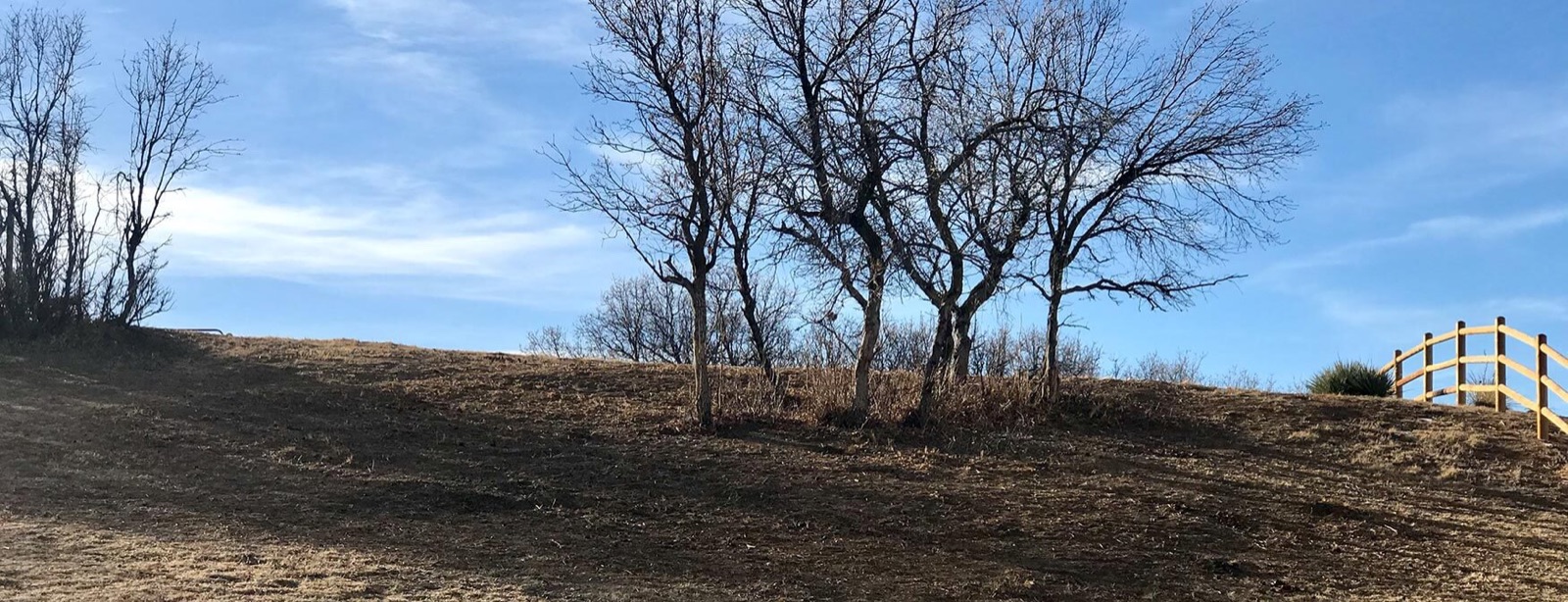
Pinyon-Juniper Country Plays by Its Own Rules
Drive up Skyline Drive and look down at the rooftops. Nearly every lot from Dawson Ranch out toward Temple Canyon backs into the same fuel type: pinyon pine and juniper on dry, rocky slopes, with cured grass filling the gaps between crowns. Juniper is the problem child. It holds dense, oily foliage all the way to the ground, so there's no break between a surface fire and a crown fire. A grass fire reaches a juniper and the whole tree goes up in seconds, throwing embers downwind onto the next one.
Canon City gets around a foot of moisture in a decent year. The slopes face south and west, wind funnels up the Arkansas from the Royal Gorge, and fuel moisture by late June can drop into single digits. That combination doesn't need a lightning storm to become a disaster. It needs one spark and an afternoon breeze.
Grass matters as much as the trees here. Cheatgrass and cured native grass fill every opening between the PJ, and they're the ignition surface. Most fires in this country start in grass along a road, a driveway, or a rail line, then climb into the junipers within minutes. So real mitigation in Canon City treats both layers: break up the tree canopy, and break up the grass carpet that feeds it.
FIRE RECORD
What Burned Above the Royal Gorge in 2013
The Royal Gorge Fire started on June 11, 2013, the same week the Black Forest Fire was burning north of Colorado Springs. It ran through pinyon-juniper on both rims, jumped the gorge itself, and destroyed most of the buildings at the Royal Gorge Bridge park. Crews who worked it say what gets said about every PJ fire: it moved faster than anyone expected, and it moved on embers, not as a tidy advancing line you can stand in front of.
That fire burned a few miles from town. The fuel it consumed is the same fuel sitting behind homes in Dawson Ranch right now, uncut and a little thicker every year. Fire history here isn't a story about somewhere else. It's a preview.
Fremont County and the local fire districts have pushed mitigation hard since that summer, with assessments and community chipping efforts that come and go with funding. Call your district and ask what's currently running before you spend anything. Free advice is worth taking. Then put your budget into the fuel itself, because paperwork never stopped an ember.
THE WORK
Grinding Juniper Instead of Piling It
My approach is simple. I bring a tracked Rayco forestry mulcher onto your lot and grind the target fuel where it stands: juniper, doghair pinyon, brush, dead and down wood. It comes off the stump and goes back onto the ground as a layer of coarse mulch in one pass. There's no slash pile waiting two years for a burn permit, no dumpster, no trucks hauling debris down your driveway. The lot is done when the machine shuts off.
Around structures I cut hard, because that's what the fuel demands. Farther out, the work turns selective. Healthy pinyon with good form stays. Crowns get separated so one torching tree can't hand fire to its neighbor. What's left looks like open woodland instead of a scraped pad, and the mulch layer holds soil on these decomposed granite slopes instead of letting the first cloudburst cut gullies through bare dirt.
SLOPE AND ROCK
Where the Machine Earns Its Keep, and Where It Can't Go
Tracks matter in this county. A wheeled machine spins and tears on the loose rock above the Arkansas, but a tracked unit spreads its weight and climbs grades that would stop a skid steer cold. I work steep ground routinely. I'll also tell you straight when a pitch is beyond safe machine operation, because rolling a mulcher into Temple Canyon helps nobody. On those bands, the honest answer is machine work where it's safe and a different plan for the rest.
Rock outcrops slow the head down and eat teeth, so I route around the worst of it and hit the fuel that actually matters. The goal isn't a manicured park. The goal is a lot where fire has to stay on the ground, where it burns slow, and where a crew can actually defend your house.
Access is the other conversation. Plenty of Dawson Ranch and Temple Canyon lots have good driveways and easy machine entry, and plenty of hillside parcels don't. I've walked lots where the answer was cutting a temporary machine path first, and lots where a neighbor's gate saved a day of maneuvering. None of that is a dealbreaker. It's information the estimate needs, which is why I quote from the ground and never from a screen.
COST AND SCHEDULING
Pricing a Canon City Lot Honestly
Four things drive price here: fuel density, slope, access, and acreage. A flat acre of scattered juniper is quick work. A steep acre of continuous PJ with a narrow gate is not, and I'll price them differently and tell you why. Because everything is mulched in place, you're not paying for hauling, dump fees, or a second contractor to deal with piles. That usually makes mastication the cheapest path to real defensible space, and the fastest by a wide margin.
I'm based in Larkspur and work Fremont County regularly. If you want numbers for your ground, start at the quote page or call (719) 400-9104. I take cash and checks, I answer my own phone, and the person who quotes the job is the person running the machine. You can see what finished ground looks like on the projects page before you commit to anything.
Free Quote · No Obligation
Clear the fuel before fire season, not during it
Or call the shop: (719) 400-9104