
Eaves as Part of Defensible Space, Parker, CO
Embers ride the wind into your eaves, but they usually get their start in fuel much closer to the ground. In Parker that fuel is often the landscaping itself. We clear the hidden hazards on the newer east-side lots and do full defensible space work in the Pinery's mature pines.
EAVES
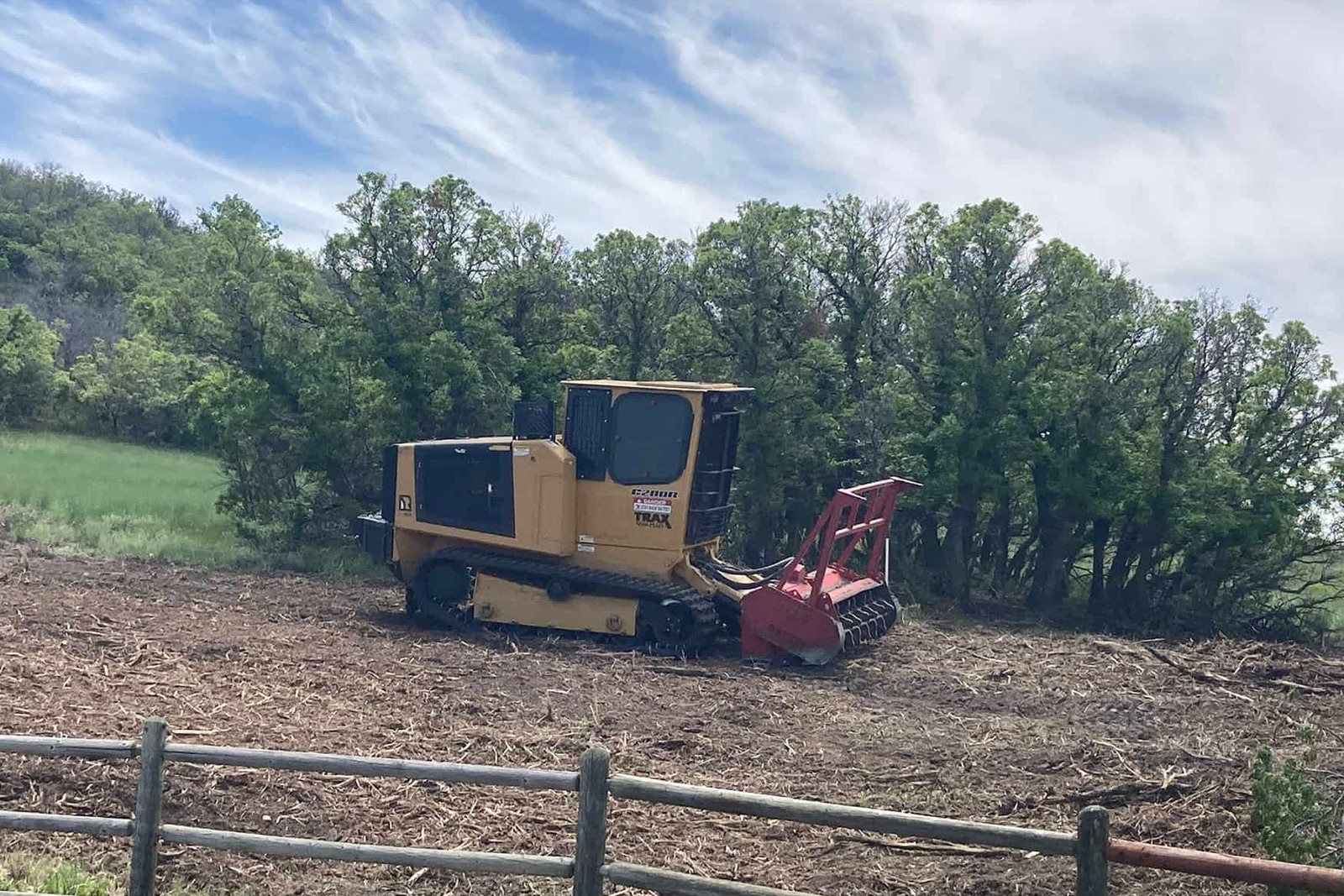
The Underside of Your Roof Is an Ember Trap
Eaves collect what wind delivers. Hot air rises along an exterior wall, carries embers up under the overhang, and holds them against soffit vents and dry fascia. If there's flame at the base of that wall, the eave becomes a chimney cap catching everything the fire sends up. Metal soffits and screened vents help. But the reliable fix is downstream of the hardware: keep flame away from the wall entirely, so nothing rides that column of hot air in the first place.
That means the vegetation decisions within 10 feet of your foundation matter more than almost anything else on the lot. Which brings us to Parker's favorite shrub.
Walk any Parker subdivision built in the last thirty years and count the junipers planted against foundations. Builders loved them: cheap, evergreen, drought-proof. Fire loves them more. Juniper foliage carries volatile oils and a core of dead, dry material, and a foundation juniper that takes an ember burns like a torch bolted to your house, directly under a window, feeding flame up the wall into those eaves. Firefighters call them gas cans. They're not exaggerating much.
On the newer east-side lots, this is often the whole job: pull the junipers and the bark-mulch beds off the foundation, swap the first five feet to rock or bare ground, and suddenly a tract home's ignition risk drops hard. Small work, big result. We fold these fixes into bigger cuts or handle a cul-de-sac's worth in a day.
THE PINERY
Old Pines, Old Oak, Real Wildland Exposure
The Pinery is a different Parker. Mature ponderosa over decades of oak understory, lots that back to Cherry Creek's drainages, and a genuine wildland interface rather than a landscaping problem. Here we run the full playbook: limb the pines, grind the oak out of the understory, open crown spacing across the back of the lot, and pay attention to the greenbelt edges where fuel runs continuously behind whole streets. Douglas County's oak is our home fuel, covered in depth on the scrub oak removal page.
Pinery oak resprouts after cutting, like all Gambel oak, so we set owners up with a light re-treatment cycle. Two passes a decade keeps a lot open. Zero passes a decade grows the problem back with interest.
A timing tip for Pinery owners: oak work shows its value fastest when it's cut in full leaf, since the plant spends its root reserves regrowing and comes back softer the next spring. But cut a neglected stand anytime. The worst month to masticate oak still beats another year of letting it thicken.
EAST SIDE
Acreage Off Hess Road and the Fuel Between
South and east of town, out Hess Road and toward the Franktown line, Parker turns into acreage: pasture grass, oak draws threading between parcels, long fence lines nobody's cleared since the fence went in. Grass fire is the main event out here, fast-moving and wind-driven, with the oak draws acting as the hot spots that hold fire and throw embers. The work is wide masticated buffers around structures, clean fence corridors, and breaking the draws where they pass near buildings. Our brush clearing page covers this kind of ground.
And if you keep horses or store hay out there, those buildings get the same buffer treatment as the house. Hay plus ember is a fire you don't put out.
Wind exposure is the east side's quiet multiplier. There's no foothill shelter out here, so the gusts that merely rattle patio furniture in old-town Parker push a grass fire at genuinely dangerous speed across open sections. Wide buffers aren't over-caution on the flats. They're matched to how fast the fuel moves when the wind owns it.
GREENBELTS
The Trail Behind the Fence Carries More Than Bikes
Parker is stitched together by greenbelts and trail corridors, and so is its fuel. The Cherry Creek corridor runs the length of town with cottonwood, willow, and heavy grass understory. Drainage swales connect subdivision to subdivision, and the strips behind back fences hold whatever volunteered there since the plat was recorded. These corridors are lovely, and they're linear fuel beds that pass behind hundreds of homes, exactly the geometry that let fire move house to house in other Front Range suburbs.
You control your side of the fence, so that's where we work: stripping the volunteer oak and elm off the fence line, clearing the shrub connection between the corridor and your landscaping, and making the last 15 feet before your structure the cleanest part of the run. Where an HOA or metro district owns the corridor itself, we've bid tract-scale mastication, and one treated corridor protects every home along it at a fraction of the per-lot cost.
If your back gate opens onto a trail, walk it after the next windstorm and look at what's accumulated against your fence. That drift line is the fire's plan. Change it.
BOOKING
From Cul-de-sac to Forty Acres, Same Process
Parker jobs range from a morning of foundation-juniper removal to multi-day Pinery thinning projects, and every one starts with a free walkthrough and a written number. We're based in Larkspur, twenty minutes down Highway 83, and we take cash and checks. No crews, no subs. The operator who quotes it cuts it.
Use the mitigation quote page to get on the calendar. If your HOA needs paperwork before machine work, tell us. We've filled out plenty of it.
Free Quote · No Obligation
Clear the fuel before fire season, not during it
Or call the shop: (719) 400-9104