
Safety Space and Defensible Space, Colorado Springs
More and more Colorado Springs homeowners aren't calling us because of a fire. They're calling because their insurance carrier sent a letter. We cut lots to an inspection-ready standard, so the next visit from an adjuster or the HOA ends with a checkmark instead of a deadline.
THE LETTER
Insurance Now Inspects What It Insures
Carriers have gotten serious about wildfire exposure along the Front Range. Aerial imagery, third-party risk scores, drive-by inspections: if your home sits in the wildland-urban interface, somebody has already scored your lot, and overgrown vegetation is the score-killer you can actually fix. The letters follow a pattern. Clear the brush within a stated distance, limb the trees, document it by a date, or face non-renewal.
It feels heavy-handed. It's also the market telling you something true: the fuel around your house is a measurable risk, and reducing it is cheaper than shopping for coverage after a non-renewal. We've turned around a lot of these letters, usually in a single day of machine work plus photos.
Read your letter carefully before calling anyone. Carriers differ on the details: some measure clearance at 30 feet, some at 100, some name specific plant types, and a few want a contractor's invoice as proof. Note the reply deadline separately from the work deadline too, since some companies expect a response within two weeks even when the cut itself can wait sixty days. Bring the letter to the walkthrough and we'll quote to its exact language, because passing their checklist is the assignment, and guessing at it wastes your clock.
CHECKLIST
What the Person With the Clipboard Wants to See
Inspection standards vary by carrier and HOA, but the core items barely change. Here's what they're checking, in roughly the order they check it:
- Nothing flammable against the structure: no shrubs under windows, no firewood on the deck, no needle drifts at the foundation
- The first 30 feet clean: grass short, brush gone or widely separated, trees limbed so no branch ladders fire off the ground
- 30 to 100 feet thinned: visible gaps between crowns, understory broken into islands, dead trees removed
- Roof and gutters free of debris, and no limbs overhanging the chimney
- Address visible and driveway passable for an engine
Notice that most of the list is vegetation. The machine handles everything but the gutters, and we'll point out the rest while we're there.
NEIGHBORHOODS
Broadmoor Bluffs, Rockrimmon, and Ute Valley Edges
These three areas generate a steady share of our inspection work, each for its own reason. Broadmoor Bluffs stacks big homes on steep oak slopes where the fuel below the house is the whole problem, and carriers know it. Rockrimmon threads through ponderosa and rock outcrops, with mature trees standing closer to walls than any modern code would allow. And the streets bordering Ute Valley Park back onto a real fuel bed that the city manages on its own timeline, not your renewal date.
Several HOAs in these neighborhoods now run their own annual mitigation standards on top of insurance requirements. We've cut to both. When the two standards differ, we build to the stricter one so you're covered either way.
Buyers and sellers feel this shift too. Homes in these neighborhoods now trade with mitigation status as part of the conversation, and listing agents have started ordering pre-sale cleanups. A documented, defensible lot closes easier. That's not the reason to do the work, but it's a real number the day you sell.
PASSING
One Visit, Documented, Done
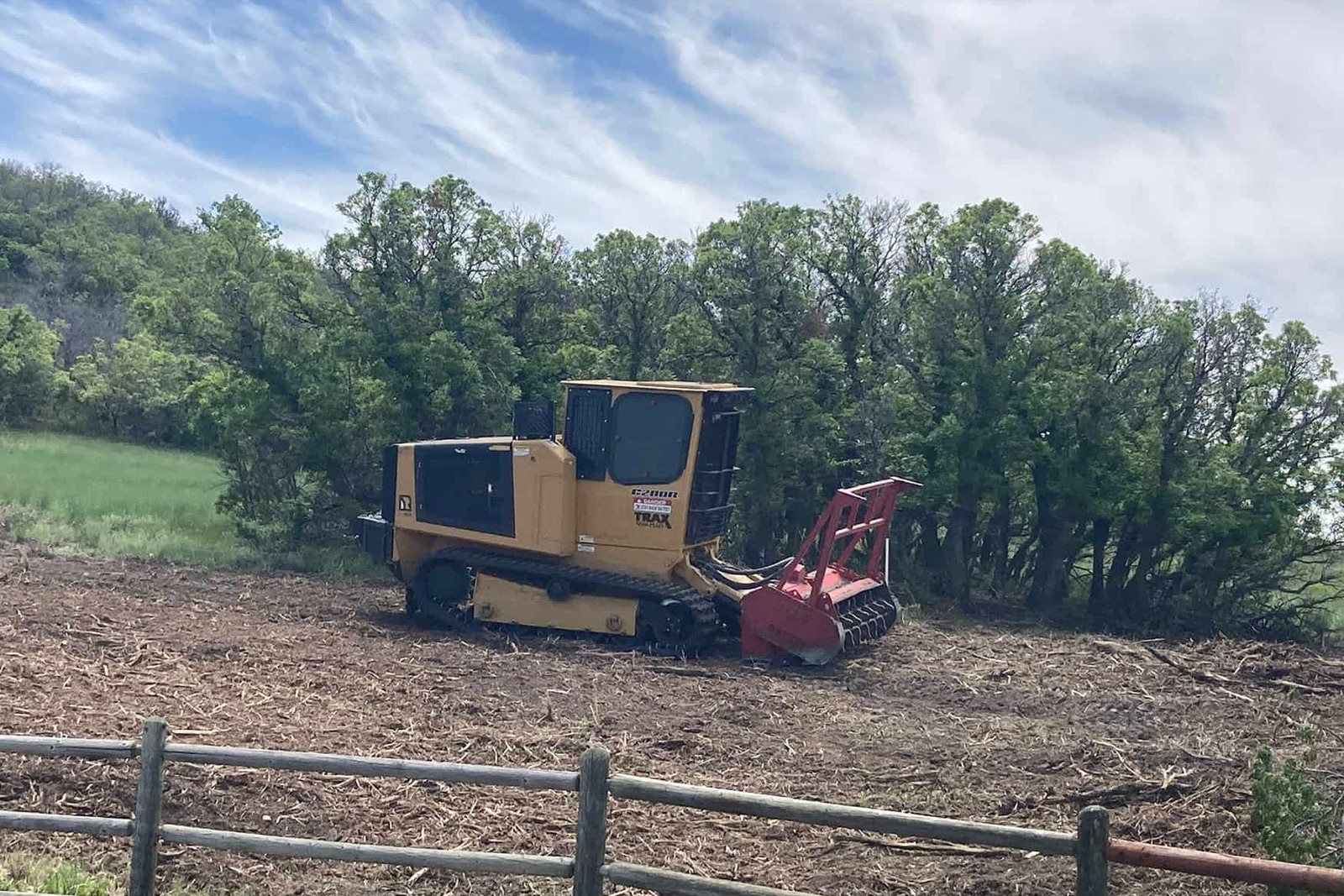
Our process for an inspection job is deliberately boring. You send us the letter or the HOA notice. We walk the lot against its requirements, quote the gap between what's there and what's demanded, and schedule the cut. The mulcher grinds oak, juniper, and small trees in place, we limb what stays, and before the trailer leaves you get photos of the finished work, shot wide enough to show the clearances.
Those photos matter. Most carriers accept dated images as proof of completion, which can close the loop without a re-inspection visit. So keep them with your policy documents, and re-shoot every couple of years as you maintain. The full scope of what we cut is on the fire mitigation page.
THE MATH
A Day of Machine Work Against Years of Premiums
Run the numbers the way a carrier does. A non-renewal in the WUI pushes you into a shrinking market where the remaining options quote higher premiums for thinner coverage, and that gap repeats every single year. Against that, most residential mitigation jobs cost about what one modest premium increase does, once. The vegetation work is the only variable in your risk score you can change in a day. You can't move the house, you can't flatten the slope, and you can't relocate the forest behind the fence.
Some carriers now factor documented mitigation into pricing or eligibility, and a few discount for it outright. But even where the paperwork earns nothing directly, the cleared lot keeps you in the standard market instead of the surplus one, which is where the real money hides.
And underneath all the actuarial framing sits the original point: the same work that satisfies an inspector is the work that gives your house a fighting chance on a bad wind day. The letter is just the reminder.
Compliance letters usually allow 30 to 60 days, and everyone who got one on your street is calling the same short list of contractors. Don't sit on it. The walkthrough costs nothing and takes half an hour, and once you're scheduled, the deadline is our problem instead of yours. But even without a letter in hand, cutting now beats cutting under a clock. The lot that's already clean never gets the letter at all.
Request your walkthrough at the mitigation quote page. One operator, tracked machine, cash or check on completion, and a lot that passes.
Free Quote · No Obligation
Clear the fuel before fire season, not during it
Or call the shop: (719) 400-9104