

Evaluating and Replanting Trees
Just because a tree has been heavily scorched in a wildfire doesn’t mean that it is dead. A lot of trees have a high chance of survival, and it’s important to evaluate every tree in the area to determine whether they can be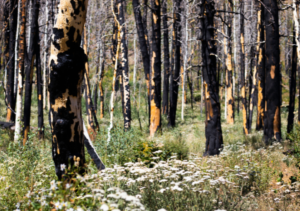 salvaged or need replanting.
Assessing the Survival of a Tree
Ponderosa pines have thick barks and deep roots. This makes them more likely to survive a fire, because they are able to gain more moisture and hold onto it. The fire isn’t going to easily burn that material as it runs through.
However, if the area was filled with a Colorado blue spruce, there’s a high chance that the tree is damaged beyond repair. The roots are shallow and the trees don’t have thick skins.
The forest service will look at the canopy. If less than 50% of that canopy is scorched, there’s a good chance of survival. Then there’s a look at the roots and bark to see if they are intact. Forest services will also look at the buds on the end of the branches to see if they are still flexible.
A questionable tree isn’t immediately cut down. It can take a few months for the tree to show some signs of repair, and the forest service will want to give it that time. However, if the tree is clearly dead, it needs to be removed. Standing trees killed by fire are dangerous as they fall over in unpredictable ways.
Replanting After a Fire
A fast-burning fire is good for the environment. A lot of grasses and bushes will come back on their own. The forest service will often decide that no action is needed and to let Mother Nature do her thing.
A slow-moving fire would have been hot. It means that there’s more of a waxy substance over the soil, and it’s much harder for the land to get the water it needs to support natural regrowth.
The forest service will then need to assess the best types of trees to replant, with the Aspen being one of the most popular. Aspens are fast-growing and deciduous, giving a natural fire resistant element to the area.
Fast-growing bushes will also be added to the plan. Birds and other wildlife will have lost their food sources and homes in the fire. With fast-growing bushes and grasses, humans can make the land safer and healthier for the wildlife looking to return.
Watch out for weeds and invasive plants, though. They tend to take over when there has been a major disturbance. Get rid of the flowers so they don’t have a chance to germinate and spread, especially if the grass you’ve planted is less than a few inches tall. You want to give the grass a chance to survive.
How to tell if a tree will survive a wildfire:
- Less than 50% of the canopy is scorched
- Bark and roots are still intact
- Buds are flexible and alive
- Tree shows signs of recovery over time